When Vision 2030 was announced in 2016, its targets sounded almost impossibly ambitious: wean the economy off oil, grow the private sector, build entire new cities, and turn a closed society into a global destination. A decade on, at the programme's halfway mark, it is fair to ask a simple question — how much of it is real?
The honest answer is: more than the sceptics expected. Vision 2030 has not hit every target on schedule, and some remain distant. But the direction and pace of change are undeniable, and several headline goals have already been met or exceeded ahead of time.
This article is a halfway-point scorecard — the concrete achievements, the metrics, and what they signal about whether the Kingdom reaches its 2030 destination.
Building the Technology Vision 2030 Runs On
Every Vision 2030 achievement — digital government, smart tourism, diversified enterprise — rests on technology. Elbetron builds that technology for Saudi organisations delivering their part of the Vision.
From AI assistants and analytics to cloud and ERP, we help government bodies and enterprises turn Vision 2030 goals into working systems.
Wherever your organisation sits in the Vision 2030 story, Elbetron provides the technical delivery to move from goal to reality.
The Economic Scorecard
The core of Vision 2030 is economic diversification, and here the progress is measurable. Non-oil activities have grown to around half of GDP, women's participation in the workforce more than doubled from its 2016 baseline — surpassing the original 30% target years early — and unemployment fell to record lows.
Foreign investment reforms, new regulations, and the opening of sectors previously closed to private capital have shifted the structure of the economy. Oil still matters enormously, but the Kingdom is measurably less dependent on it than it was in 2016 — the single most important test of Vision 2030.

- Non-oil activity near half of GDP
- Female workforce participation more than doubled
- Unemployment at record lows
- Private sector opened to previously restricted investment
Giga-Projects: From Blueprint to Concrete
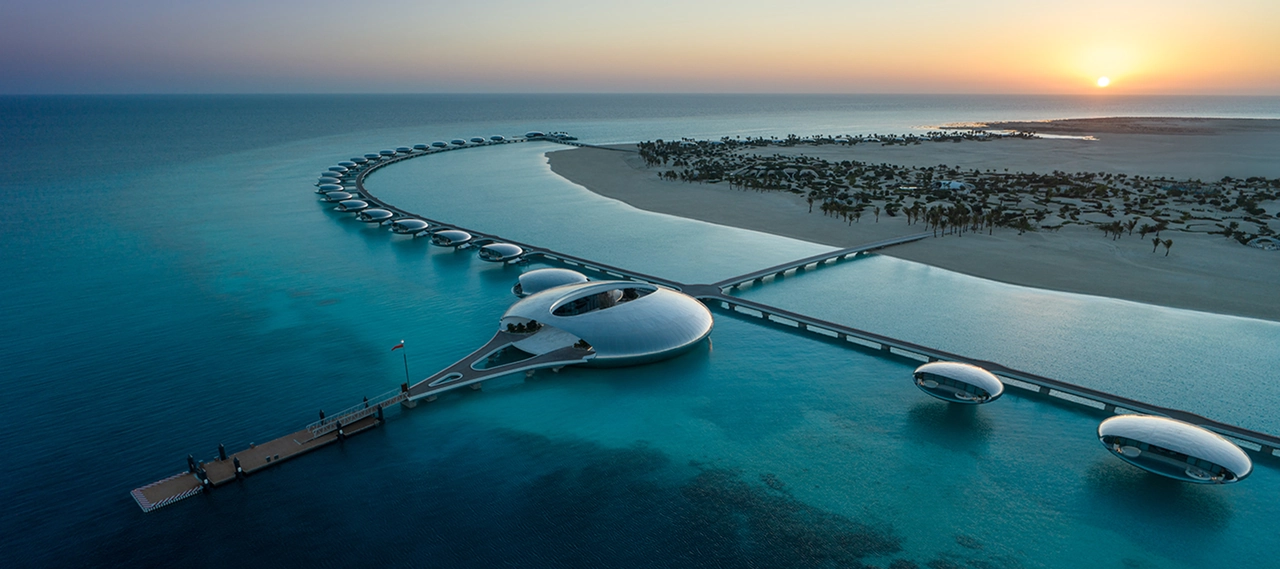
The giga-projects — NEOM, The Red Sea, Diriyah, Qiddiya, ROSHN — were the most doubted part of Vision 2030. At the halfway mark, they have moved from renders to construction: The Red Sea welcomed its first resorts and airport, Diriyah's historic district reopened as a global destination, and Qiddiya's entertainment city is rising.
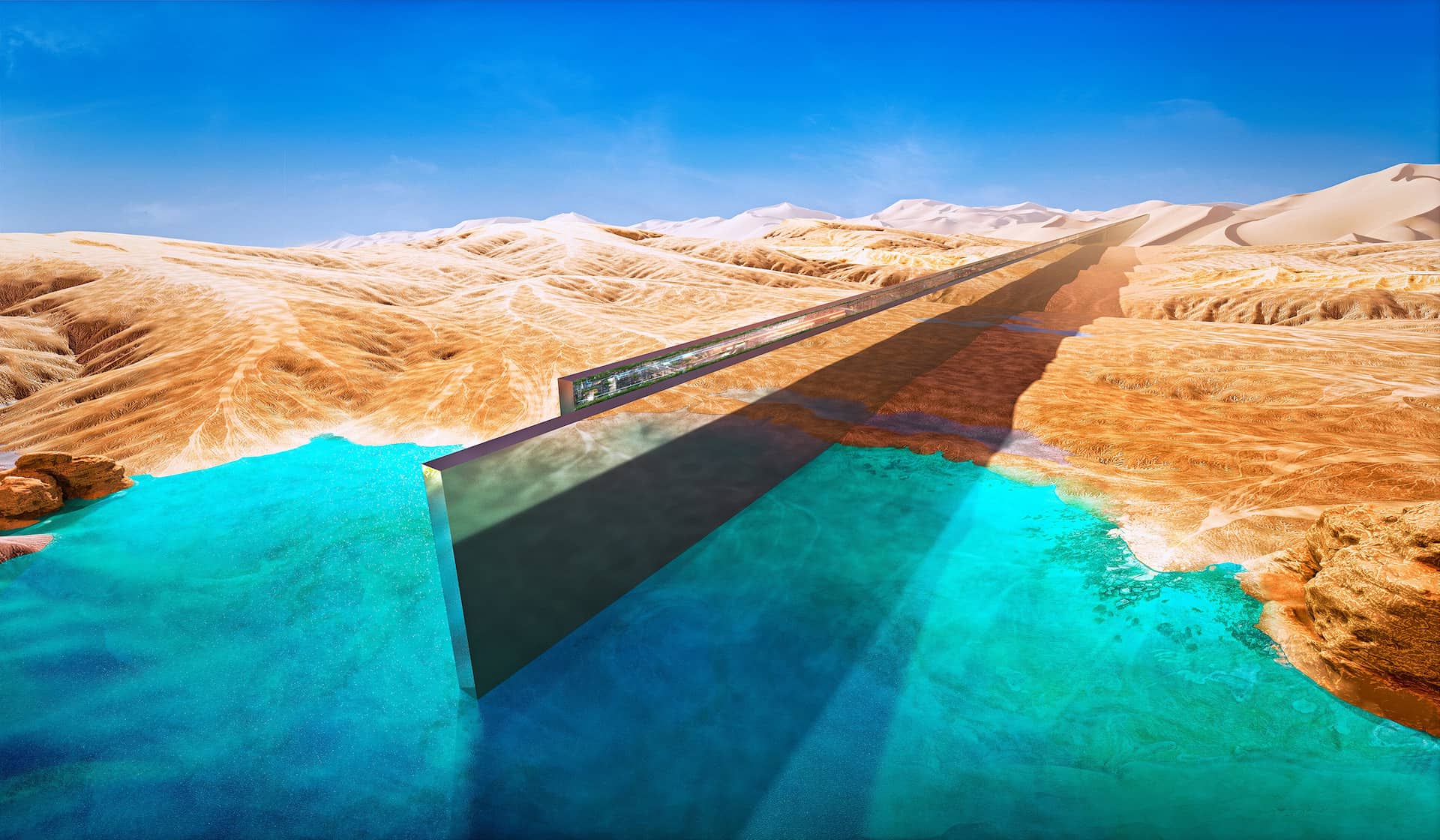
NEOM remains the boldest and most debated bet, with THE LINE and OXAGON under active construction. Timelines have shifted and scopes have been revised — as expected for projects of this scale — but the transformation of physical Saudi Arabia is now visible on the ground, not just on paper.
- The Red Sea: first resorts and international airport open
- Diriyah: historic district reopened as a global destination
- Qiddiya: entertainment and sports city under construction
- NEOM: THE LINE and OXAGON in active build-out
The Digital Transformation
Less visible than the giga-projects but arguably more impactful is the digital transformation. Saudi Arabia now ranks among global leaders in digital government, with the vast majority of services available online through platforms like Absher and Tawakkalna, which evolved from a pandemic tool into a super-app for citizen services.
This digital layer is what makes the rest of Vision 2030 work. Tourism, investment, and business setup all became dramatically easier because the government digitised the processes behind them. The Kingdom's rise in global digital-competitiveness and e-government rankings reflects real, felt change for citizens and businesses.
- Among global leaders in e-government maturity
- Most government services now fully online
- Tawakkalna evolved into a citizen super-app
- Business setup and licensing largely digitised
Opening to the World
In 2019 Saudi Arabia issued its first tourist visas. By the halfway mark, tourism has become one of Vision 2030's clearest successes — visitor numbers surged, entire new destinations opened, and the sector's share of GDP climbed toward its ambitious targets, in some measures ahead of schedule.
Entertainment, sport, and culture — from major football signings to global concerts, esports tournaments, and film — transformed the Kingdom's image and daily life. This social opening, alongside the economic reforms, is one of the most consequential changes of the whole programme.
What Still Has to Happen
A fair scorecard notes the gaps too. Some giga-project timelines have slipped, private-sector job creation must keep pace with a young population entering the workforce, and reducing oil dependence further gets harder as the easy wins are banked. The second half of Vision 2030 is, in some ways, the harder half.
But the trajectory matters more than any single missed date. Saudi Arabia has proven it can execute transformation at scale — and that credibility is itself an asset. The question at the halfway mark is no longer whether Vision 2030 is real, but how much of its full ambition the Kingdom reaches by 2030.
Frequently Asked Questions
What has Vision 2030 achieved so far?
By its halfway mark, Vision 2030 has pushed non-oil activities to roughly half of GDP, doubled female workforce participation since 2016, opened the country to tourism, and moved giga-projects from blueprint to construction. Many targets are tracking ahead of the original plan.
Is Saudi Arabia on track to meet Vision 2030 goals?
Several key indicators are on or ahead of schedule, including non-oil GDP, tourism, and workforce participation. Some ambitious targets remain challenging, but the overall direction shows substantial, measurable progress at the midpoint.
How has Vision 2030 changed Saudi society?
It has expanded women's participation in the workforce, opened entertainment and tourism, and modernised daily life through digital government and services. These social changes are as significant as the economic ones.
What still needs to happen for Vision 2030?
The remaining years focus on completing giga-projects, growing the private sector to 65% of GDP, deepening diversification, and sustaining job creation. The foundation is built; the second half is about delivery at scale.
Conclusion
At its halfway mark, Vision 2030 has moved from ambition to evidence. Non-oil growth, giga-projects rising from the ground, a world-class digital government, and a tourism sector built from scratch are concrete achievements that few predicted a decade ago.
The second half will be harder, but the Kingdom has already answered the biggest question: it can transform at scale. For businesses, the opportunity is to build on that momentum — because the Vision's remaining goals will be delivered by the organisations that execute.
How Elbetron Can Help
Services directly related to what you just read