For most of its history, Saudi Arabia generated electricity almost entirely by burning gas and oil. That is now changing on a measurable schedule. The Ministry of Energy's stated aim is for natural gas and renewable energy to each make up roughly 50% of the electricity generation mix by 2030, with liquid fuel pushed out of power plants. In August 2026 the ministry put installed renewable capacity at 18.8 GW, against a goal of 20 GW by the end of the year.
The second half of the story is storage. Solar plants produce nothing at night, and a grid that leans on them needs somewhere to keep energy for the evening peak. Saudi Arabia has moved quickly here too: a 2 GWh battery in Bisha, a 7.8 GWh fleet across three southwestern sites connected in December 2025, a 12.5 GWh supply contract with BYD, and the first independent storage projects awarded by the Saudi Power Procurement Company (SPPC) in August 2026, all set against a national target of 48 GWh of battery storage by 2030.
Our earlier article on green tech under Vision 2030 covered the broad innovation picture. This one is narrower and more numerical: what the 2030 target actually says, how capacity is procured, which flagship projects are running, how the storage build-out is taking shape, where green hydrogen stands, and where data and software fit into a grid that is becoming far more variable. We close with what it means for Saudi businesses and the people who will work in this sector.
Elbetron Builds the Data and Software Layer, Not the Power Plant
Elbetron Technologies is a Saudi technology company. We do not build solar farms, wind turbines or batteries. What we do build is the software that organisations run on: data platforms, analytics dashboards, AI models and custom applications, designed and developed in the Kingdom.
For energy developers, contractors, facility operators and industrial energy users, that means turning operational data into decisions: consolidating readings from meters, inverters and sensors, building forecasting models for load and generation, and putting the results in front of the people who need them, in Arabic and English.
If your organisation is part of the energy transition, as an operator, a contractor or a large consumer, we can help you make better use of the data you already collect.
The 2030 Target: What Was Actually Promised
The headline figure is often quoted loosely, so it is worth being precise. The Ministry of Energy describes its goal as diversifying the fuels used to generate electricity so that natural gas and renewable energy each account for approximately 50% of the electricity generation mix by 2030, while the use of liquid fuel in power plants is reduced. In other words, the target is about the electricity mix, not about all energy consumed in the Kingdom, and its other half is gas, not oil.
The capacity figure that accompanies this goal is usually given as a range. The King Abdullah Petroleum Studies and Research Center (KAPSARC), which runs a public Saudi renewables tracker, describes the ambition as 100 to 130 GW of renewable generation capacity by the end of the decade, alongside the Kingdom's net-zero goal for 2060. The Ministry of Energy's own programme page states the mix target rather than a gigawatt number, which is why careful readers should treat the GW figure as an ambition range rather than a single fixed commitment.
Progress has accelerated sharply. In August 2026 the Ministry of Energy said installed renewable capacity had reached 18.8 GW, up 1 GW from early July and 1.2 GW short of its end-2026 goal of 20 GW, according to MEES. KAPSARC's tracker, using its own method, counted 19.3 GW of operational solar and wind capacity in 2026, a 63-fold increase since 2020, with a further pipeline of 63.8 GW across 53 projects.
That still leaves a long way to go before 2030, and independent analysts have questioned whether the full target will be reached on time. But the direction is not in doubt, and the speed of the last two years is what makes the target a planning reality for utilities, contractors and the businesses that serve them.
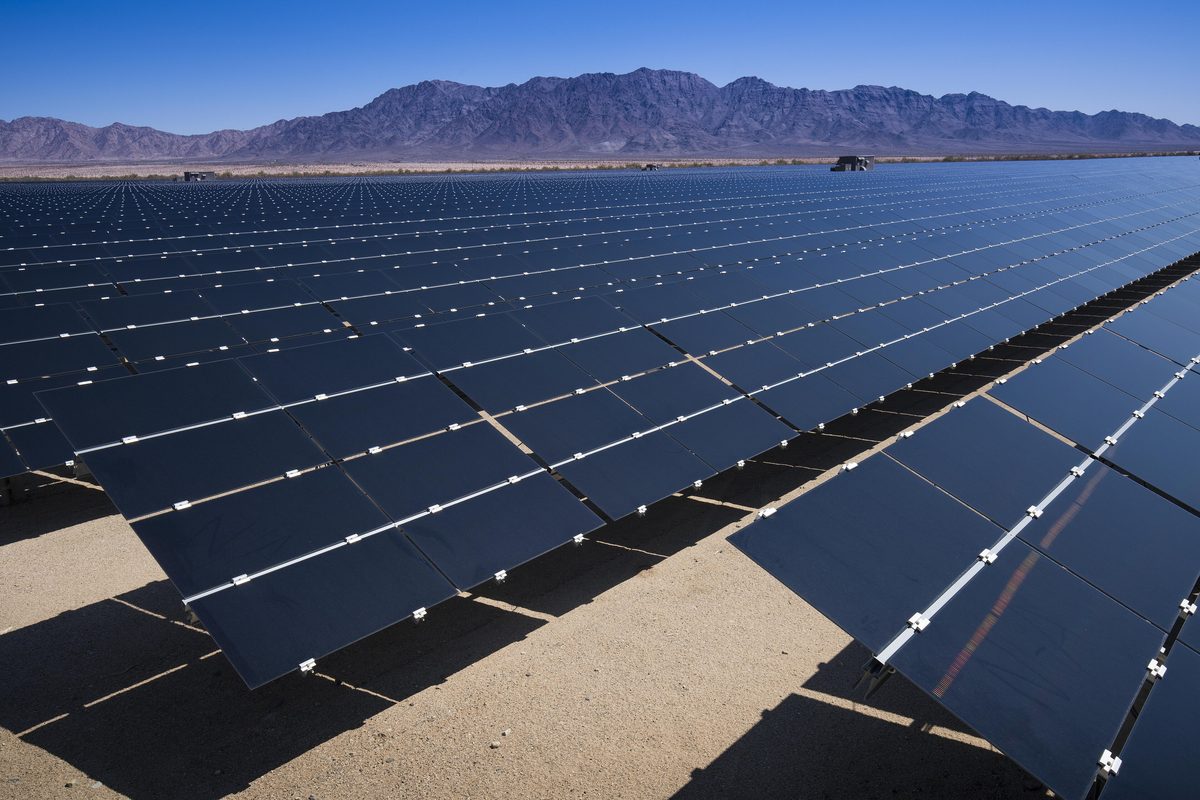
- Gas and renewables to each supply roughly 50% of electricity generation by 2030
- Liquid fuel to be displaced from power plants over the same period
- Capacity ambition described by KAPSARC as 100 to 130 GW by 2030
- 18.8 GW installed as of August 2026, per the Ministry of Energy, against a 20 GW end-2026 goal
NREP Rounds and the PIF Track: How Capacity Gets Built
Saudi renewable capacity arrives through two main channels. The first is the National Renewable Energy Program (NREP), a strategic initiative under the King Salman Renewable Energy Initiative and Vision 2030, run by the Ministry of Energy. Under NREP, the Saudi Power Procurement Company (SPPC) tenders projects in competitive rounds and signs long-term power purchase agreements with the winning developers. The first round paired the Sakaka solar plant with the Dumat Al Jandal wind farm for a combined 700 MW; the second covered seven solar projects totalling 2,970 MW; the third, four solar projects totalling 1,200 MW.
The rounds have grown much larger since. Argaam reported in September 2025 that SPPC had launched 43.2 GW of renewable capacity, secured agreements for 38.7 GW and connected 10.2 GW to the grid. That same month SPPC opened Round 7: 5.3 GW made up of four solar plants (Tabarjal 2 at 1.4 GW, Mawqaq and Tathleeth at 600 MW each, and South AlUla at 500 MW) and two wind farms (Bilghah at 1.3 GW and Shagran at 900 MW). MEED reported that developers submitted bids for the Round 7 solar and wind projects on 13 and 14 September 2026.
The second channel is the Public Investment Fund. PIF has committed to develop 70% of the Kingdom's renewable target capacity by 2030, largely through partnerships between its utility arm Badeel, ACWA Power and Saudi Aramco Power Company (SAPCO). The scale is visible in a single day: on 14 July 2025 the three signed power purchase agreements with SPPC for seven projects totalling 15,000 MW and roughly US$8.3 billion of investment.
Those seven projects show where the next wave sits geographically: Bisha (3,000 MW solar, Asir), Humaij (3,000 MW solar, Madinah), Khulais (2,000 MW solar, Makkah), Afif 1 and Afif 2 (2,000 MW solar each, Riyadh), and two wind projects in Riyadh province, Starah (2,000 MW) and Shaqra (1,000 MW). Commercial operation is scheduled between the second half of 2027 and the first half of 2028.
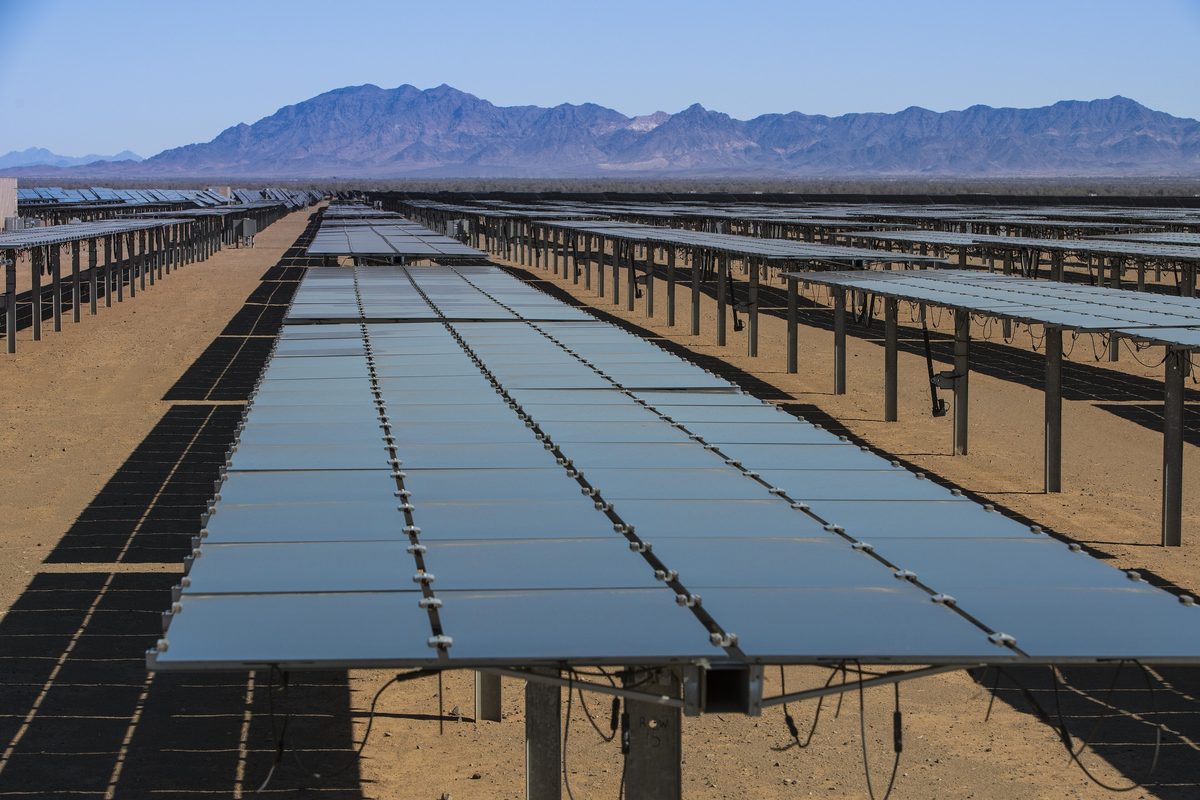
- Ministry of Energy: sets policy and oversees NREP
- SPPC: the principal buyer, running tenders and signing PPAs and storage agreements
- PIF via Badeel: committed to develop 70% of the 2030 renewable target
- ACWA Power: lead developer on many flagship solar, storage and hydrogen projects
Flagship Solar and Wind Projects, by the Numbers
Sudair Solar PV, 1,500 MW, was one of the first projects of the PIF track to reach full scale. Its third and final phase received a commercial operation certificate from SPPC on 3 January 2024, bringing the full plant into commercial operation. ACWA Power holds 35% of the project, with Badeel and SAPCO as its partners.
On the Red Sea coast in Makkah province, the Al Shuaibah complex is now the largest solar site in the Kingdom. Al Shuaibah 1 (600 MW) received its commercial operation certificate in November 2024 and holds the record-low tariff of 1.04 US cents per kWh cited in KAPSARC's tracker. Al Shuaibah 2, at 2,060 MW and a reported cost of SAR 6.56 billion, received certificates for all three phases in February 2025, with ACWA Power stating that the project was in full operation. Together the two plants exceed 2.6 GW.
Wind arrived earlier than many expected. Dumat Al Jandal in Al Jouf, the Kingdom's first utility-scale wind farm, began generating power in August 2021 with 99 Vestas turbines of 4.2 MW each, for 400 MW in total. Developed by EDF Renewables and Masdar at a bid of US$21.30 per MWh, it is expected to supply the electricity needs of about 70,000 Saudi households a year. Wind has since grown: KAPSARC lists the 600 MW Alghat project in Riyadh and the 500 MW Waad Al Shammal project in the Northern Borders as brought online in 2026.
The 2026 cohort of solar plants is larger still. KAPSARC lists eight projects totalling 7.7 GW scheduled for completion in 2026, including Haden (2 GW, Makkah), Muwayh (2 GW), Al Khushaybi (1.5 GW, Al-Qassim) and Tabarjal (400 MW, Al-Jouf). MEES attributed part of the 1 GW jump in installed capacity during July 2026 to the partial grid connection of Al Khushaybi.
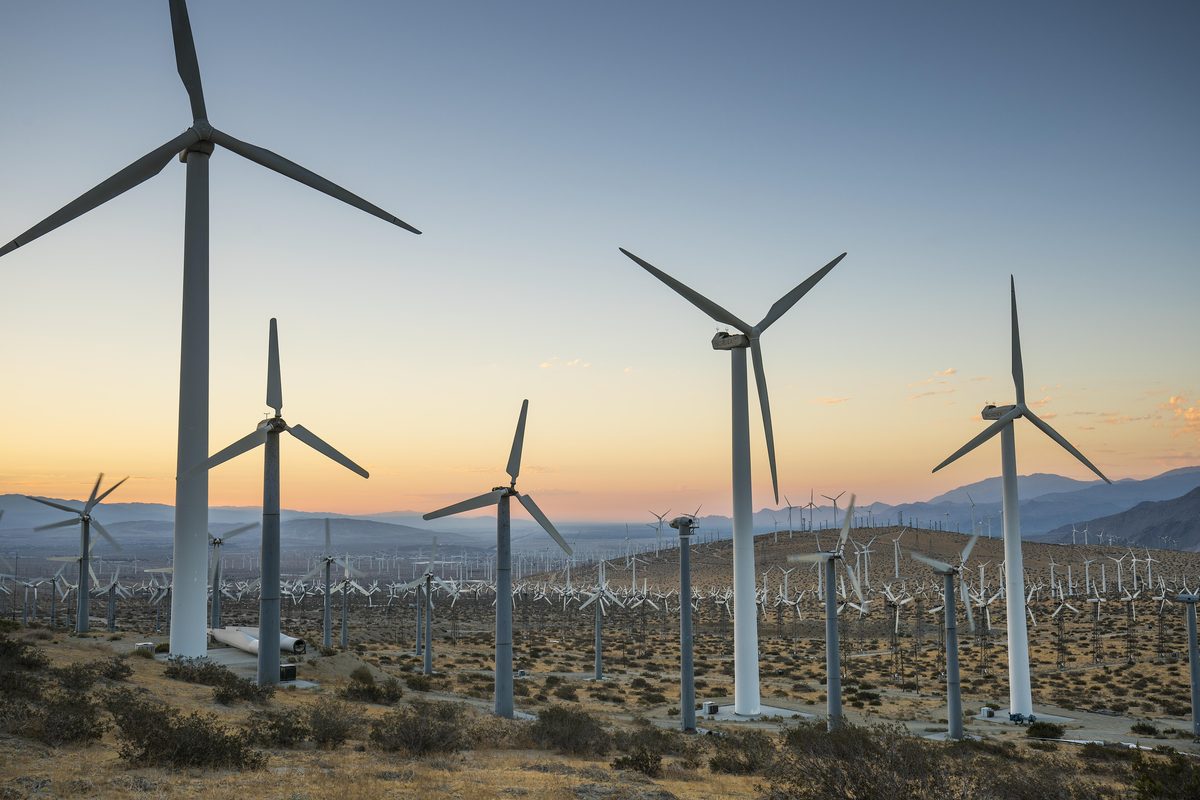
- Sudair Solar PV: 1,500 MW, full commercial operation January 2024
- Al Shuaibah 1 and 2: 600 MW and 2,060 MW, together more than 2.6 GW
- Dumat Al Jandal: 400 MW from 99 turbines, the Kingdom's first utility-scale wind farm
- 2026 completions include Haden, Muwayh, Al Khushaybi and Tabarjal
The Battery Storage Boom
Solar is cheap but follows the sun, and Saudi electricity demand peaks into the evening as air conditioning keeps running after dark. That gap is why storage has become the fastest-moving part of the Saudi energy story. The national goal, reported alongside SPPC's 2026 storage awards, is 48 GWh of battery energy storage by 2030.
Saudi Electricity Company (SEC) has led the first wave on its own balance sheet. In January 2025, pv magazine reported that SEC had commissioned a 500 MW / 2,000 MWh battery system in Bisha, Asir province, built by a consortium of State Grid Corporation of China and Alfanar with BYD storage units. In December 2025, SEC completed the grid connection of a 7.8 GWh system split equally across Najran, Khamis Mushait and Madaya, each site linked to the 380 kV transmission network. Algihaz Holding delivered it under a turnkey contract with Sungrow equipment, and Sungrow estimates its annual throughput at 2.2 billion kWh, equivalent to the yearly electricity needs of about 400,000 Saudi households. In February 2025, BYD also signed contracts with SEC for a further 12.5 GWh across five projects, described as the third phase of SEC's storage procurement.
The second wave is private capital. In August 2026, SPPC signed 15-year storage service agreements for the first group of build-own-operate battery projects: four sites of 500 MW / 2,000 MWh each, totalling 2 GW / 8 GWh and more than US$1.16 billion of investment. A consortium of Saudi Energy, ACWA Power and Al Sharif Contracting won Al Muwayh and Haden in Makkah region and Al Kahafa in Hail; Engie and Haji Abdullah Alireza & Co. won Al Khushaybi in Qassim. A second round of six projects totalling 3 GW / 12 GWh is already under way, with 27 companies prequalified in July 2026.
These systems do more than shift solar into the evening. The 7.8 GWh fleet, for example, is designed as grid-forming storage, offering black-start capability, virtual inertia, fast frequency response and voltage support: services that conventional spinning generators used to provide by default, and which a grid with more inverter-based power must now provide deliberately.
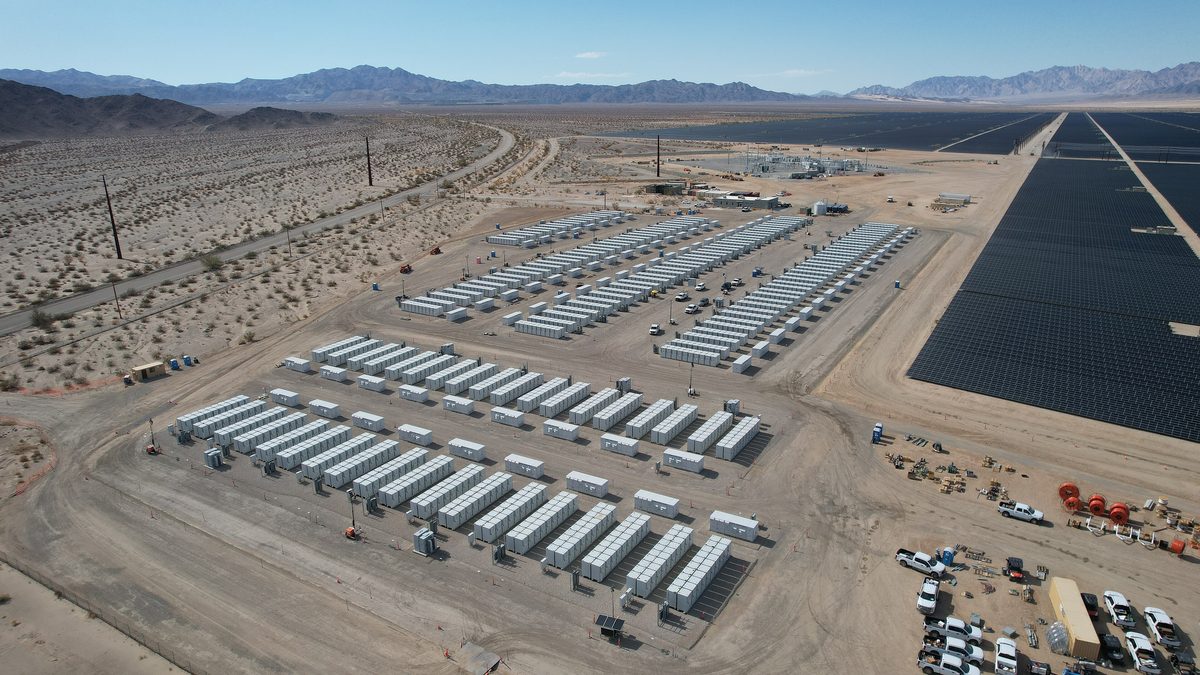
- Bisha: 500 MW / 2,000 MWh, reported commissioned January 2025
- SEC southwest fleet: 7.8 GWh across three 2.6 GWh sites, grid-connected December 2025
- BYD and SEC: 12.5 GWh across five projects, contracts signed February 2025
- SPPC Round 1: 2 GW / 8 GWh, 15-year agreements signed August 2026; Round 2 targets 3 GW / 12 GWh
Off-Grid Power and Green Hydrogen: Red Sea and NEOM
Two giga-projects show renewables and storage working outside the conventional grid. Red Sea Global's destination on the western coast runs on an off-grid utility system developed by an ACWA Power-led consortium. ACWA Power lists 358 MW of installed solar and 1,225.4 MWh of battery storage, with 112.5 MW of backup generation. The system also powers desalination, wastewater treatment and district cooling. In May 2025 Guinness World Records certified it as the world's highest-capacity off-grid battery-based energy storage facility, and EPC contractor SEPCOIII announced full commercial operation of the complex on 21 August 2026.
NEOM Green Hydrogen Company (NGHC), a joint venture of ACWA Power, Air Products and NEOM, is the other landmark. The US$8.5 billion project uses about 4 GW of solar and wind to power electrolysis, designed to produce up to 600 tonnes of green hydrogen a day, converted into up to 1.2 million tonnes of green ammonia a year for export. Its renewable package includes a 2,200 MW solar plant, a 1,370 MW wind farm and a 400 MW battery system, built by Larsen & Toubro.
In August 2026, MEED reported ACWA Power's chief financial officer as saying on the company's half-year earnings call that construction was complete and commissioning was under way, with commercial operation targeted for 2027. Air Products holds a 30-year agreement to buy all of the plant's green ammonia.
For the wider economy, these projects are proof of concept at scale. They show that solar-plus-storage can run a self-contained city-scale system around the clock, and that Saudi sunshine and wind can be turned into an exportable product, not just domestic electricity.
- Red Sea Global: 358 MW solar and 1,225.4 MWh storage running fully off-grid
- Guinness World Records certification for off-grid battery capacity, May 2025
- NGHC: about 4 GW of renewables feeding up to 600 tonnes of hydrogen a day
- NGHC construction complete and commissioning under way, commercial operation targeted for 2027
Where Software and AI Fit in a Renewable Grid
A grid run mostly on gas plants is controlled by deciding how much fuel to burn. A grid with tens of gigawatts of solar and wind is controlled by forecasting: how much sun and wind will arrive in each region, how much demand will rise when temperatures climb, and when to charge or discharge gigawatt-hours of batteries. Every one of those decisions is a data problem before it is an engineering problem.
Saudi utilities are already investing in the data layer. In July 2025 Wipro announced a multi-year contract with National Grid SA, part of SEC, to implement a smart meter data management system for the transmission network, providing real-time data on power flow, voltage and equipment, and supporting grid planning through what the company called intelligent forecasting and reporting. In December 2025, SEC signed a cooperation agreement with technology firm Abjay to apply AI-driven analytics to its smart meter ecosystem, covering monitoring, predictive analysis and data-driven decision-making.
The practical applications are well understood. Short-term solar and wind forecasting helps operators schedule reserves. Load forecasting tells storage when to hold energy for the evening peak. Predictive maintenance flags inverter, transformer and battery faults before they cause outages. And for a storage fleet that sells services under 15-year contracts, accurate performance data is directly tied to revenue.
None of this replaces the engineers who design and operate power systems. What it does is give them better information, faster. As the share of variable generation rises toward the 2030 target, the quality of that information becomes a large part of what keeps the lights on.
- Solar irradiance and wind forecasting for dispatch and reserve planning
- Demand forecasting tied to temperature and the evening peak
- Battery charge and discharge scheduling against forecasts
- Predictive maintenance and smart-meter analytics across the network
What It Means for Saudi Businesses and Talent
For industrial and commercial companies, the build-out changes the planning baseline. Large tenders with record-low tariffs, a growing storage fleet and a stated policy of moving liquid fuel out of power generation all point toward a power system that is cleaner, more diverse and more digitally managed. Companies with sustainability reporting obligations, export customers who ask about carbon, or energy-intensive operations have good reason to follow the programme closely.
The supply chain is broad. Every gigawatt involves engineering, procurement and construction, grid connection, operations and maintenance, security, logistics and financing. The storage awards alone span developers, contractors and equipment suppliers on multi-year contracts, and the 15-year storage agreements signed in 2026 create long-lived operating businesses that need monitoring, reporting and maintenance throughout their life.
For talent, the opportunity sits at the junction of energy and digital skills. Power systems engineers, battery and power-electronics specialists and HSE professionals remain essential. Alongside them, demand is growing for data engineers who can work with sensor and meter data, analysts who can build forecasting models, and software developers who can build the dashboards, integrations and mobile tools that field teams and control rooms use every day.
For Saudi technology companies, the honest takeaway is that most of the value is in the unglamorous parts: clean data pipelines, reliable reporting, well-built internal tools and forecasting models that operators actually trust. That is where software firms can contribute without pretending to build power plants.
- Track NREP and SPPC rounds: they signal where capacity, contractors and jobs will concentrate
- Plan for a grid where storage and forecasting shape supply
- Invest in people who combine energy domain knowledge with data skills
- Treat operational data as an asset from day one of any energy project
Frequently Asked Questions
What is Saudi Arabia's renewable energy target for 2030?
The Ministry of Energy aims for natural gas and renewable energy to each make up approximately 50% of the electricity generation mix by 2030, while reducing the use of liquid fuel in power plants. The accompanying capacity ambition is described by KAPSARC as 100 to 130 GW of renewable generation capacity by the end of the decade.
How much renewable capacity does Saudi Arabia have today?
In August 2026 the Ministry of Energy reported installed renewable capacity of 18.8 GW, against a goal of 20 GW by the end of 2026, according to MEES. KAPSARC's renewables tracker, using its own methodology, counted 19.3 GW of operational solar and wind capacity in 2026, with a further 63.8 GW in the pipeline across 53 projects.
What are the largest renewable energy projects in Saudi Arabia?
Among operating plants, the Al Shuaibah complex in Makkah province (Al Shuaibah 1 at 600 MW and Al Shuaibah 2 at 2,060 MW) exceeds 2.6 GW, and Sudair Solar PV is 1,500 MW. Dumat Al Jandal (400 MW) was the first utility-scale wind farm. Larger projects are coming: in July 2025, PPAs were signed for seven projects totalling 15,000 MW, including 3,000 MW solar plants at Bisha and Humaij.
What is the 7.8 GWh battery project?
It is a battery energy storage system owned by Saudi Electricity Company, split across three 2.6 GWh sites in Najran, Khamis Mushait and Madaya and connected to the 380 kV transmission network. Its grid connection was completed in December 2025. Algihaz Holding delivered it with Sungrow equipment, and it is designed to provide grid-forming services such as black-start and fast frequency response.
How big is the Saudi energy storage market?
The national target is 48 GWh of battery storage by 2030. Projects already built or contracted include SEC's 2 GWh Bisha system, the 7.8 GWh southwestern fleet, a 12.5 GWh BYD supply contract with SEC, and SPPC's first independent storage round of 2 GW / 8 GWh awarded in August 2026, with a second round of 3 GW / 12 GWh in procurement.
Who are the main players in Saudi renewable energy?
The Ministry of Energy sets policy and oversees the National Renewable Energy Program. SPPC is the principal buyer that runs tenders and signs long-term agreements. PIF, through Badeel, has committed to develop 70% of the 2030 renewable target. ACWA Power leads many flagship projects, and international developers such as EDF Renewables, Masdar and Engie also hold major contracts.
What is the status of the NEOM green hydrogen project?
As reported by MEED in August 2026, ACWA Power said construction of the US$8.5 billion NEOM Green Hydrogen Company plant was complete and commissioning was under way, with commercial operation targeted for 2027. The plant is designed to produce up to 600 tonnes of green hydrogen a day, converted to up to 1.2 million tonnes of green ammonia a year, with Air Products as the 30-year offtaker.
How do AI and software help a renewable grid?
They turn variable supply into something operators can plan around. Typical uses include solar and wind forecasting, demand forecasting, scheduling battery charging and discharging, predictive maintenance, and analytics on smart meter data. SEC and National Grid SA have already signed agreements for smart meter data management with forecasting capabilities and for AI-driven meter analytics.
Conclusion
Saudi Arabia's renewable energy programme has moved from announcements to operating plants. Sudair, Al Shuaibah and Dumat Al Jandal are running; installed renewable capacity reached 18.8 GW in August 2026; 15 GW of new PIF-track projects are due in 2027 and 2028; and Round 7 bids are in. The storage build-out, from Bisha to the 7.8 GWh southwestern fleet to the first independent storage awards, is turning cheap daytime solar into power the grid can use around the clock.
The 2030 goal of a roughly 50% renewable share of electricity generation remains demanding. But the combination of record-low tariffs, a fast-growing battery fleet and a utility sector investing in data and forecasting gives the Kingdom a credible path. For Saudi businesses and talent, the opportunity lies in every layer of that path, including the software and data layer that makes a variable grid work.
Photo credits: Reegan Moen. – U.S. Department of Energy from United States, public domain · Tom Brewster Photography / Wikimedia Commons, CC BY 2.0 · blmcalifornia, public domain
How Elbetron Can Help
Services directly related to what you just read