Robotics in Saudi Arabia is no longer a topic reserved for exhibition halls. Inspection drones fly over oil and gas facilities, robotic shelving moves e-commerce orders in Riyadh warehouses, surgeons at King Faisal Specialist Hospital have carried out transplants without opening the chest, and five autonomous robots have been delivering meals across a Riyadh business district. Behind these deployments sits a national industrial policy that explicitly asks factories to automate.
Most writing on the subject stays at the level of strategy. This guide is deliberately practical. It looks at where robots are being used across Saudi industry, logistics, healthcare and energy; which companies and programmes are doing the work; where young Saudis compete in robotics; which universities and academies train the people who build and run these systems; and how an ordinary business can start without buying a single robot on day one.
Everything here is drawn from public announcements by ministries, universities, hospitals and the companies themselves, and written as of late September 2026. Where a figure comes from a company's own statement rather than independent verification, we say so. We do not rank companies, because no public, sourced ranking of Saudi robotics firms exists — and inventing one would help no one.
Elbetron Builds the Software and AI Layer Around Automation
To be clear about what we do: Elbetron Technologies does not manufacture robots. We are a Saudi technology company that builds the software that automation depends on — workflow and automation apps, custom software, integrations, and AI assistants that help people run operations day to day.
For a factory, warehouse or service business preparing for robotics, that usually means automating manual processes first, connecting the systems that hold orders, assets and maintenance data, and adding AI where it helps staff. Elbi, our bilingual Arabic and English AI assistant hosted inside the Kingdom, can answer staff questions about procedures and documents so knowledge does not sit with one person.
If you are mapping where automation fits in your operation, we can help you start with the software and data layer — the part that makes every later investment, including robots, easier to justify.
The Policy Behind Saudi Arabia's Robotics Push
Saudi Arabia's interest in robotics is rooted in industrial policy rather than novelty. In October 2022, Crown Prince Mohammed bin Salman launched the National Industrial Strategy, which aims to raise the number of factories in the Kingdom to about 36,000 by 2035, triple manufacturing GDP by 2030 and lift industrial exports to SR557 billion. It identifies more than 800 investment opportunities across 12 industrial sub-sectors. Growth on that scale cannot rely on adding low-cost manual labour; it depends on productivity, and productivity in modern manufacturing increasingly means automation.
The most direct expression of that thinking is the Future Factories Program, announced by the Ministry of Industry and Mineral Resources in 2022. Its stated aim is to move 4,000 factories away from reliance on low-skilled labour toward automation, advanced technology and AI. In practice, the programme starts with measurement: the ministry's digital maturity self-assessment asks factories to rate themselves on areas such as production, supply chains and equipment automation, so that support can be matched to where each plant actually is.
The programme has started to attract private delivery partners. In April 2026, Saudi firms Zetta Technologies and Riyadh Dynamics signed an agreement reported at SAR 1.5 billion at the ministry's headquarters in Riyadh to offer Robotics-as-a-Service and Devices-as-a-Service to factories on a subscription basis, with integrated solutions aimed at more than 4,000 factories under the Future Factories initiative. The same announcement links the effort to a goal of enabling 14 Saudi factories to meet the standards of the World Economic Forum's Global Lighthouse Network by 2030.
That Lighthouse benchmark is not abstract for the Kingdom. Aramco already has five facilities in the network — the Uthmaniyah Gas Plant, the Khurais oil complex, the Abqaiq Plants, the Yanbu Refinery and, since January 2025, the North Ghawar Oil Producing Complex. These sites show what Fourth Industrial Revolution adoption looks like at scale, and they give Saudi manufacturers a domestic reference point rather than a foreign one.
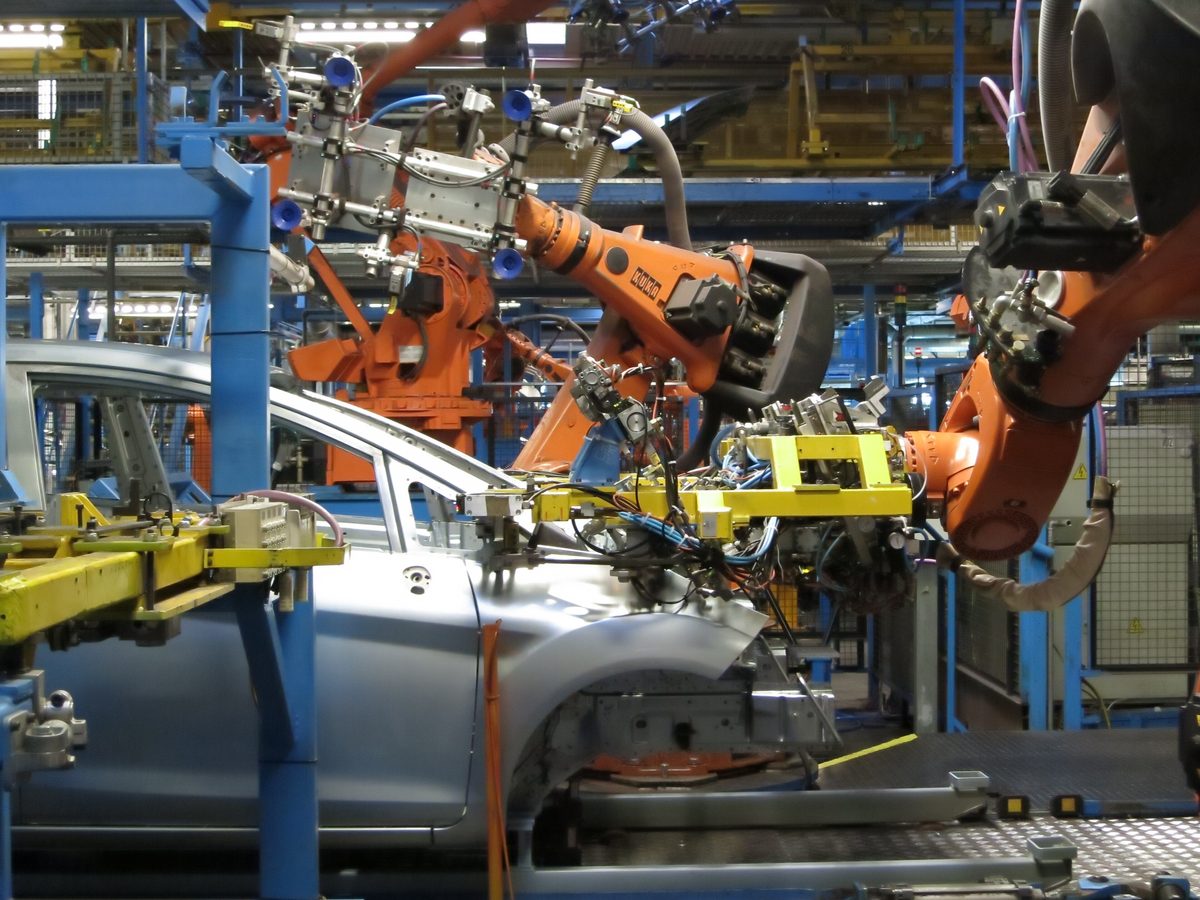
- National Industrial Strategy (launched October 2022): about 36,000 factories by 2035
- Future Factories Program: 4,000 factories moving toward automation and advanced technology
- Digital maturity self-assessment for factories, run by the Ministry of Industry
- Robotics-as-a-Service models emerging to lower upfront costs for factories
Energy and Heavy Industry: Where Saudi Robots Already Work
The oil and gas sector is where robotics in the Kingdom has the longest track record, mainly because inspection in hot, hazardous and hard-to-reach places is exactly what robots are good at. Aramco began using drones in 2015 for inspections at seven facilities and now operates more than 100 drones across most of its major facilities. According to the company, they inspect flare stacks with thermal imaging while the stacks keep running, carry ultrasonic sensors to find corrosion, survey pipelines and well sites, and detect methane leaks using thermal gas imaging and laser absorption spectrometry.
The results the company reports are operational rather than cosmetic. Aramco says the Uthmaniyah Gas Plant cut inspection times by 90% using drones and wearables, and that the Abqaiq Plants used drones and other robots for almost a third of routine operations. Those are the kinds of numbers that make the business case for automation in other heavy industries: less time with people at height or near live equipment, and fewer shutdowns for inspection.
Robotics at Aramco also goes beyond drones. In 2017 its Research and Development Center demonstrated SWIM-R, a shallow-water inspection and monitoring robot, at Ras Tanura West Pier, where it carried out visual inspection of underwater pipelines, marine-life cleaning, ultrasonic thickness readings and cathodic protection measurements. A 2021 industry review in the Journal of Petroleum Technology also described an explosion-proof firefighting ground robot introduced in 2019 and next-generation ground robots with arms designed to operate valves and local panels.
Manufacturing investment is following. At LEAP 2025, Alat and Lenovo jointly announced a $2 billion investment in an AI- and robotics-driven manufacturing centre in Riyadh, which will also serve as Lenovo's regional headquarters. Projects like this matter for the wider ecosystem because they create demand for local integrators, maintenance technicians, software engineers and suppliers around the robots themselves.
- 100+ Aramco drones for inspection, leak detection and surveying
- 90% shorter inspection times reported at the Uthmaniyah Gas Plant
- SWIM-R underwater inspection robot demonstrated at Ras Tanura in 2017
- $2 billion Alat–Lenovo AI and robotics manufacturing centre announced in Riyadh
Logistics, Delivery and Healthcare Robotics
E-commerce has made warehouses the second big arena for robots in the Kingdom. In February 2023, Starlinks and robotics supplier Geek+ announced a Riyadh fulfilment facility of just over 400,000 square feet running 250 Geek+ robots, with storage for more than 12 million units and an expected average of 3.6 million orders a month. The model is hybrid: robots move shelves and sort, while people handle the tasks that still need hands and judgement.
Postal and parcel operators are moving in the same direction. In early 2024, IQ Robotics, Saudi Post (SPL) and Alkhereiji Group announced an agreement to deploy 200 robots for processing and sorting at an SPL sorting centre in Riyadh. In September 2026, IQ Robotics said it had set up a Saudi headquarters in Riyadh; the company reports more than 1,000 robots deployed across the region, around 400 of them in Riyadh, and plans to run robotic fulfilment for e-commerce companies in the city.
Last-mile delivery is earlier in its journey but already visible on the street. In July 2025, ROSHN Group and the food delivery platform Jahez launched a fully autonomous delivery service with five robots at ROSHN Front in Riyadh. The robots were developed by ROSHN's Emerging Technologies team under its ROSHNEXT innovation programme, and the service runs during working hours, carrying meals from nearby restaurants to offices in the district.
Healthcare has produced some of the Kingdom's most widely reported robotics milestones. In September 2024, King Faisal Specialist Hospital and Research Centre (KFSHRC) announced what it described as the world's first fully robotic heart transplant, performed on a 16-year-old patient without opening the chest, after the team rehearsed the procedure virtually seven times over three days. In January 2025, the same team reported a robot-assisted implantation of a HeartMate 3 artificial heart pump. Milestones like these depend on more than the surgical robot: imaging, simulation, scheduling and clinical data systems all have to work together.
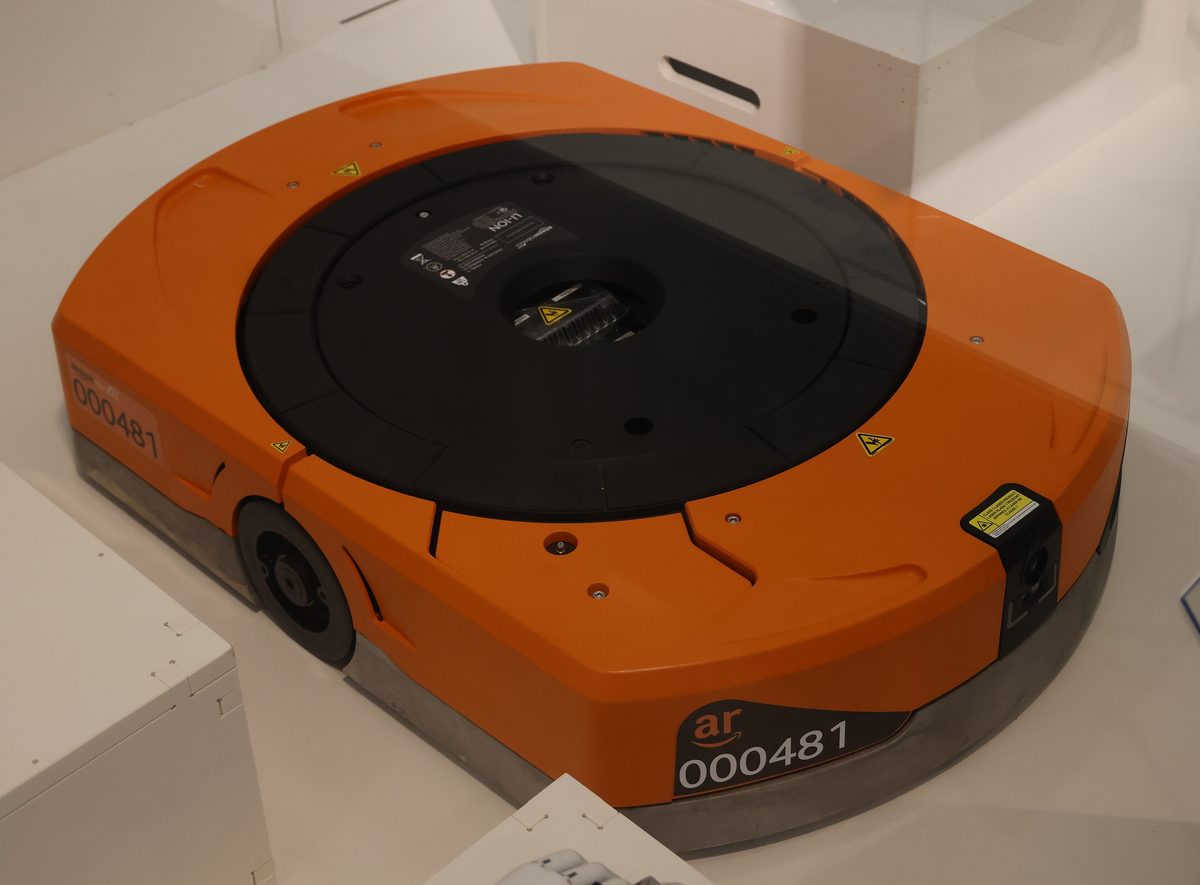
- 250 Geek+ robots at Starlinks' Riyadh fulfilment facility (announced 2023)
- 200 robots agreed for a Saudi Post sorting centre in Riyadh (2024 agreement)
- 5 autonomous delivery robots in the ROSHN–Jahez service in Riyadh (July 2025)
- Robotic heart transplant and artificial heart pump implantation at KFSHRC
Robotics Companies and Startups Operating in the Kingdom
Anyone searching for a Saudi Arabia robotics company will find a mix of local builders, regional operators and international suppliers working through Saudi partners. The examples below are verified from public announcements; they are not a ranking, and the list is not exhaustive. They are useful mainly as a map of the different business models that exist in the market today.
QSS AI & Robotics is a Riyadh-based company that builds and deploys robots and AI systems. It introduced Sara, presented as the first Saudi-made humanoid robot, in early 2023, and its line-up has since included humanoids named Mohamad and Saud alongside security, cleaning, delivery and collaborative robots. In November 2025, QSS and the UK firm Humanoid opened the Humanoid Lounge at QSS's Riyadh headquarters, described as the Middle East's first dedicated humanoid robotics showroom. The two companies also announced a pre-order framework for up to 10,000 humanoid units over five years, with QSS as Humanoid's exclusive Saudi partner overseeing local assembly at the Riyadh Robotics Factory — figures that come from the companies' own statements.
Other models sit around automation services and operations. Zetta Technologies and Riyadh Dynamics are packaging Robotics-as-a-Service and Devices-as-a-Service subscriptions for factories under the Future Factories initiative. IQ Robotics, founded in the UAE, combines its own warehouse-management software with robots sourced from overseas hardware suppliers, and now runs a Riyadh headquarters. Starlinks operates a robot-assisted fulfilment centre with Geek+, while ROSHN built its delivery robots in-house through ROSHNEXT. On the investment side, Aramco Ventures took part in the 2023 Series B of the Swiss legged-robot maker ANYbotics.
The pattern is instructive for anyone entering the market. Very few players manufacture every part of a robot. Most of the value sits in integration — choosing hardware, connecting it to warehouse, factory or hospital systems, writing the software that coordinates it, and keeping it running. That is good news for Saudi talent and for software companies, because integration and operations are local, recurring work.
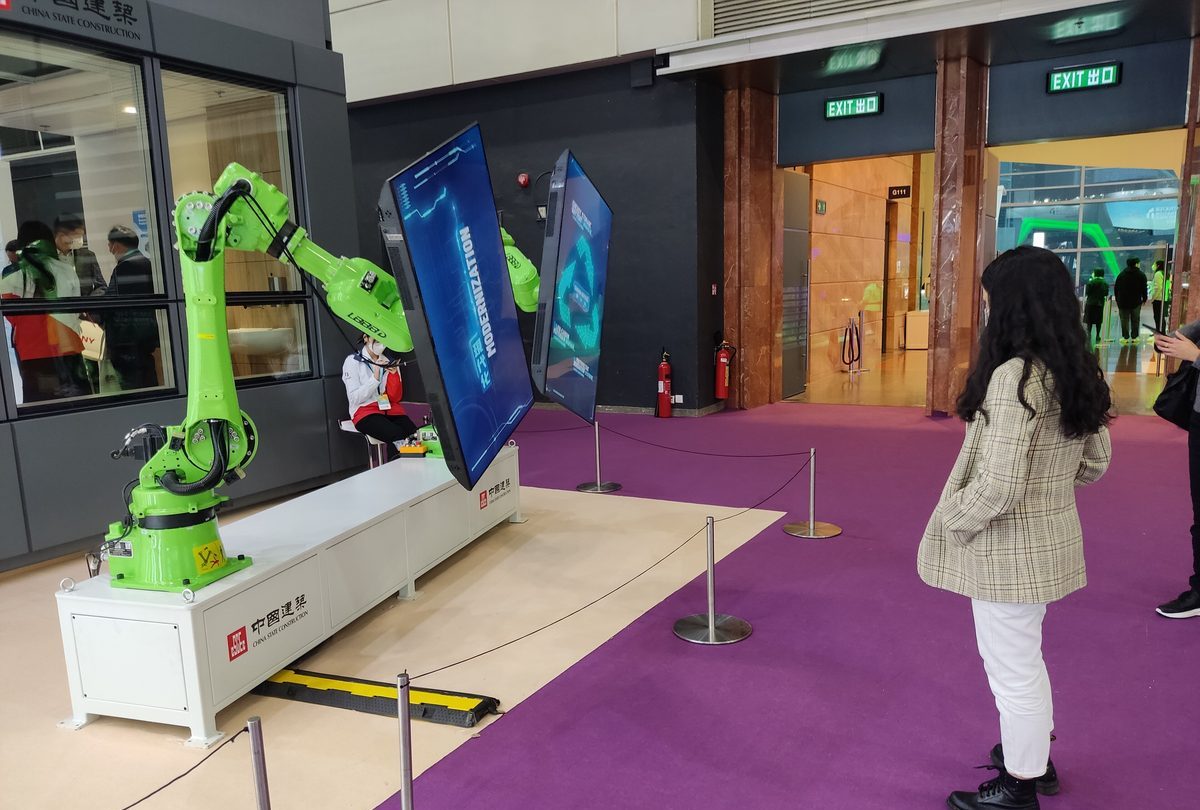
- Local humanoid and service-robot builders (e.g. QSS AI & Robotics)
- Robotics-as-a-Service subscriptions for factories (e.g. Zetta Technologies with Riyadh Dynamics)
- Robotic fulfilment operators and integrators (e.g. IQ Robotics, Starlinks with Geek+)
- In-house corporate robotics teams (e.g. ROSHN's ROSHNEXT, Aramco R&D)
Robotics Competitions in Saudi Arabia
For students, competitions are the most visible entry point into Saudi Arabia robotics, and the national calendar has grown into a genuine pipeline. The best-known is the World Robot Olympiad (WRO). In October 2025, the Ministry of Education hosted the national WRO finals at its headquarters in Riyadh with the Saudi Federation for Robotics and RC Sports and the Education Technology Development Company (TETCO). Eighty-three teams with more than 170 students, guided by 80 trainers, competed across categories including Future Innovators, RoboMissions, RoboSports, Future Engineers and Robot-Sumo, under the theme “The Future of Robots and Space”.
Results abroad have improved steadily. At the 2024 WRO international final in Izmir, Türkiye, the Kingdom sent 15 teams of 30 students, and Al-Jawhara Al-Qahtani and Aseel Al-Jasser placed first among Arab countries and ninth globally on their debut in the Future Engineers category. At WRO 2025 in Singapore, Okaz reported that Sari Al-Qahtani and Abdulrahman Al-Rashid won a silver medal and first place in the Arab world with an autonomous Mars rover, built through a Tuwaiq Academy and Misk Schools partnership with sponsorship from the Saudi Space Agency.
WRO is not the only route. Saudi teams competed at the 2023 FIRST Championship in Houston, where four teams took part across FIRST LEGO League and FIRST Tech Challenge. Robotics has also appeared at the Saudi Games: the Saudi Federation for Robotics and RC Sports ran a VEX V5 Robotics Competition youth championship as part of the Games in Riyadh on 16–17 October 2024. In May 2025, the federation partnered with VEX Robotics and the Robotics Education & Competition Foundation to expand teacher training and build local, regional and national VEX competitions.
Two more pathways matter for older students and technical trainees. The Saudi Skills National Competition, run by the Technical and Vocational Training Corporation, held a mobile robotics challenge in Al-Ahsa in December 2024 with 40 participants from six institutions, feeding the WorldSkills framework. And Mawhiba's National Olympiad for Scientific Creativity (Ibdaa), organised with the Ministry of Education, has included robots and smart devices among its project categories, with top finalists going on to compete for places at the Regeneron International Science and Engineering Fair.
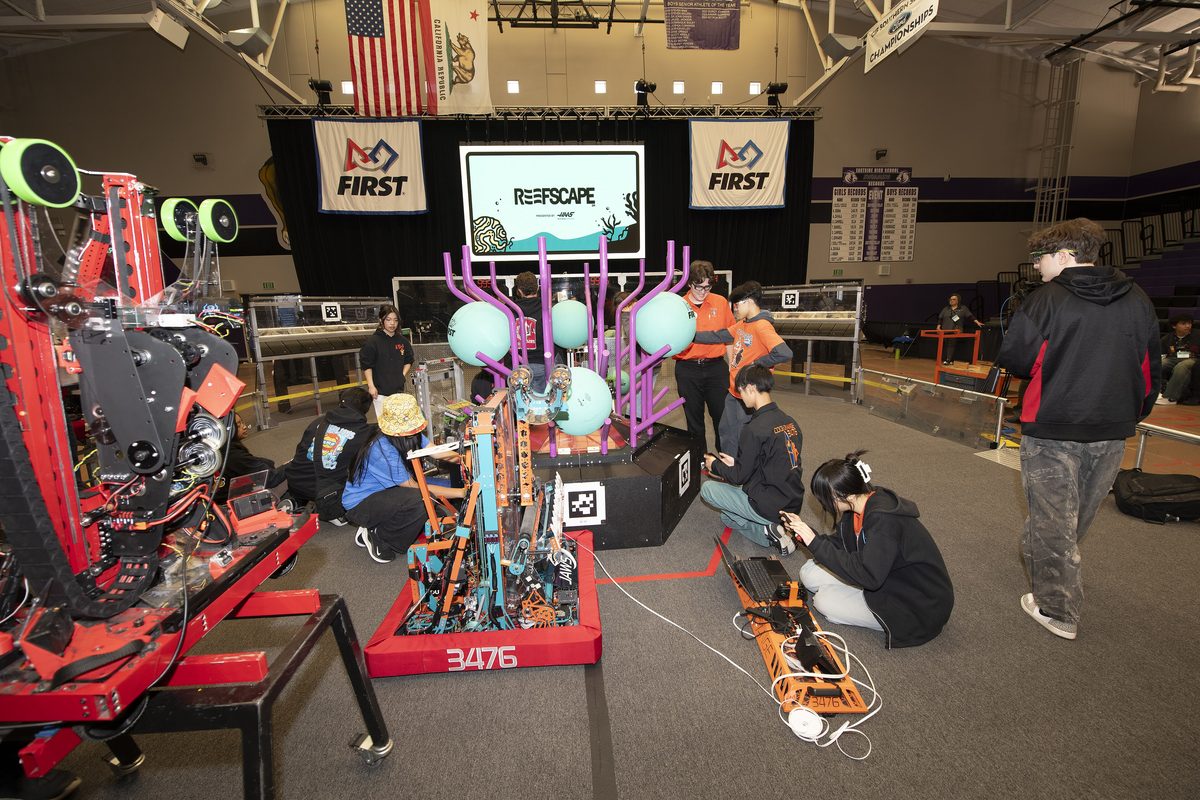
- World Robot Olympiad national finals, Ministry of Education (83 teams in 2025)
- FIRST LEGO League and FIRST Tech Challenge teams at the FIRST Championship
- VEX competitions, including the Saudi Games youth championship in 2024
- Saudi Skills mobile robotics (TVTC) and Mawhiba's Ibdaa olympiad
Education and Careers: How to Work in Saudi Robotics
Universities are expanding their robotics capacity. In October 2025, KAUST opened the Robotics Bay, a 1,000-square-metre facility supervised by Professor Eric Feron and Assistant Professor Shinkyu Park of the Electrical and Computer Engineering faculty. It supports work on agile ground and aerial robots, human–robot collaboration, multi-robot swarms and marine robotics, with applications in smart cities, autonomous mobility and infrastructure.
In the Eastern Province, KFUPM hosts the Interdisciplinary Research Center for Intelligent Manufacturing and Robotics, which describes its mission as advancing Industry 4.0 toward zero-waste, zero-defect production. At the undergraduate level, KFUPM offers a Robotics and Autonomous Systems concentration covering mechatronics, robotics and drones, taken as four courses (12 credits) in the senior year, alongside a separate Drone Design and Application concentration. Outside universities, Tuwaiq Academy announced more than 200 new training camps and programmes in August 2025 across fields including mechatronics engineering, drones and artificial intelligence.
Searches for Saudi Arabia robotics jobs often assume the work is about building robots from scratch. In reality, most openings sit around robots: automation and controls engineers who program PLCs and robot cells; maintenance and field technicians who keep fleets running; software engineers who write fleet-management, vision and integration code; data and AI engineers who turn sensor data into decisions; and project and operations managers who plan deployments. Drone operation and inspection is a growing niche in energy and infrastructure.
The skills that travel best are practical: Python and C++, ROS (Robot Operating System), computer vision, PLC programming, networking and industrial protocols, safety standards, and the ability to connect a robot to an ERP or warehouse-management system. Bilingual communication matters too, because Saudi projects often combine international suppliers with Arabic-speaking operators. For students, a competition record, a capstone robot and an internship with an integrator or industrial operator are a stronger signal than a list of courses.
- Programming: Python, C++, ROS and embedded systems
- Automation: PLCs, robot cells, industrial networks and safety
- Perception and AI: computer vision, sensor fusion, machine learning
- Integration: connecting robots to ERP, WMS and hospital or plant systems
How Saudi Businesses Can Start: Automation, Software and AI
For most Saudi companies, the right first step is not a robot. It is understanding which processes are repetitive, rule-based and measurable — and whether the data to run them already exists. The Ministry of Industry's digital maturity self-assessment is a useful mirror for factories; for service companies, a simple process inventory does the same job. Automation that starts in software is cheaper, faster to change and builds the data foundation that physical robots will later depend on.
The second step is integration. A warehouse robot needs order data from the e-commerce platform and returns status to the warehouse system; an inspection drone produces images that someone has to triage, store and act on; a factory cell needs work orders, quality records and maintenance schedules. Much of the return on a robotics investment comes from these connections, which is why Robotics-as-a-Service providers bundle software and support with the hardware.
The third step is intelligence. AI now sits on top of automation as the layer that interprets: classifying inspection images, forecasting maintenance, answering staff questions about procedures in Arabic and English, or routing exceptions to the right person. Starting with clear, narrow use cases — and measuring hours saved, errors avoided and downtime reduced — makes it far easier to justify the next stage, whether that is more software or a first physical robot.
- Map repetitive processes and check whether the data already exists
- Automate in software first: workflows, approvals, reporting, integrations
- Connect systems so future robots receive and return clean data
- Add AI for interpretation, forecasting and bilingual staff support
Frequently Asked Questions
What is the Future Factories Program in Saudi Arabia?
It is a Ministry of Industry and Mineral Resources programme, announced in 2022, that aims to move 4,000 factories away from reliance on low-skilled labour toward automation, advanced technology and AI. It begins with a digital maturity self-assessment, and in April 2026 Zetta Technologies and Riyadh Dynamics signed an agreement, reported at SAR 1.5 billion, to offer Robotics-as-a-Service and Devices-as-a-Service to factories under the initiative.
Which robotics companies operate in Saudi Arabia?
Publicly documented examples include QSS AI & Robotics in Riyadh, which builds humanoid and service robots and runs the Humanoid Lounge showroom with the UK firm Humanoid; Zetta Technologies and Riyadh Dynamics, which offer Robotics-as-a-Service to factories; IQ Robotics, which runs robotic fulfilment and opened a Riyadh headquarters in 2026; and Starlinks, which operates a Geek+ robot-assisted fulfilment centre. ROSHN and Aramco also run in-house robotics work. This is not a ranking and not a complete list.
How does Aramco use robots?
Aramco began using drones in 2015 and now operates more than 100 across most of its major facilities for inspection, flare stack thermal imaging, ultrasonic corrosion testing, pipeline surveillance and methane leak detection. It has also developed SWIM-R, a shallow-water inspection robot demonstrated at Ras Tanura in 2017, and has described a firefighting ground robot introduced in 2019. Aramco says the Uthmaniyah Gas Plant cut inspection times by 90% using drones and wearables.
What robotics competitions can Saudi students join?
The main routes are the World Robot Olympiad national finals run by the Ministry of Education with the Saudi Federation for Robotics and RC Sports; FIRST LEGO League and FIRST Tech Challenge; VEX competitions, which have included a Saudi Games youth championship; the Saudi Skills mobile robotics challenge run by the Technical and Vocational Training Corporation; and Mawhiba's Ibdaa olympiad, which has included a robots and smart devices category.
How have Saudi teams performed at the World Robot Olympiad?
At WRO 2024 in Izmir, Türkiye, Al-Jawhara Al-Qahtani and Aseel Al-Jasser placed first among Arab countries and ninth globally in Future Engineers on their debut. At WRO 2025 in Singapore, Okaz reported that Sari Al-Qahtani and Abdulrahman Al-Rashid won a silver medal and first place in the Arab world with an autonomous Mars rover project.
Where can I study robotics in Saudi Arabia?
KAUST opened its 1,000-square-metre Robotics Bay in October 2025 for research on ground, aerial, swarm and marine robots. KFUPM offers a Robotics and Autonomous Systems concentration for undergraduates and hosts an Interdisciplinary Research Center for Intelligent Manufacturing and Robotics. Tuwaiq Academy runs short programmes in fields including mechatronics engineering and drones.
What skills do Saudi Arabia robotics jobs require?
Most roles combine programming (Python, C++, ROS), automation (PLCs, robot cells, industrial networks and safety), perception and AI (computer vision and machine learning), and systems integration with ERP and warehouse-management software. Field technicians, drone operators and project managers are also in demand. A competition record or capstone project is a strong signal for graduates.
Does a business need to buy robots to benefit from automation?
No. Most companies get faster returns by automating software workflows first — approvals, reporting, data entry and system integrations — and adding AI for interpretation and staff support. This builds the clean data and connected systems that physical robots need later, and many providers now offer robots on a subscription basis when that step makes sense.
Conclusion
Robotics in Saudi Arabia is now a working reality across energy, logistics, healthcare and manufacturing, backed by a National Industrial Strategy and a Future Factories Program that explicitly ask industry to automate. Companies such as QSS AI & Robotics, IQ Robotics, Starlinks and the Robotics-as-a-Service providers show the range of business models, while Aramco and KFSHRC show what disciplined deployment can deliver.
The talent pipeline is developing in parallel: from WRO, FIRST, VEX and Saudi Skills competitions to KAUST's Robotics Bay, KFUPM's robotics programmes and Tuwaiq Academy's bootcamps. For businesses, the lesson is to start where returns are fastest — automating processes, connecting systems and adding AI — so that when robots arrive, the software and data around them are ready.
Photo credits: KUKA Roboter GmbH, Bachmann, public domain · GillyBerlin from Spain / Wikimedia Commons, CC BY 2.0 · Geni / Wikimedia Commons, CC BY-SA 4.0 · AKAMGO yalms / Wikimedia Commons, CC BY-SA 4.0 · NASA Armstrong Flight Research Center / NASA/Genaro Vavuris, public domain · Shixart1985 / Wikimedia Commons, CC BY 2.0
How Elbetron Can Help
Services directly related to what you just read