Vision 2030 is the most ambitious national transformation programme in the Arab world. Behind its bold targets — a diversified economy, digital government, world-class cities — one technology does more of the heavy lifting than any other: artificial intelligence. This article explains why AI has moved from being one tool in Vision 2030's toolkit to being its single most essential instrument.
Vision 2030: The Transformation Mandate
Announced in 2016 by Crown Prince Mohammed bin Salman, Vision 2030 is Saudi Arabia's blueprint for transforming a hydrocarbon-dependent economy into a diversified, knowledge-driven powerhouse. Its targets are specific and audacious: reduce oil revenues' share of government income from 87% to under 30%, grow the private sector from 40% to 65% of GDP, create 1.2 million new private sector jobs, and make Saudi Arabia one of the top 15 economies in the world by 2030.
These are not incremental improvements — they require the complete reimagining of how the Saudi state delivers services, how Saudi businesses create value, and how Saudi citizens participate in the economy. That level of transformation at that speed cannot be achieved through conventional means. It requires technology as a force multiplier — and artificial intelligence is that multiplier.
Every major pillar of Vision 2030 has an AI dimension. NEOM's ambient intelligence systems, the digital government's 24/7 service mandate, the healthcare sector's expansion targets, the education system's shift toward personalized learning, the energy sector's efficiency push — none of these are achievable at Vision 2030's pace and scale without AI at their core.
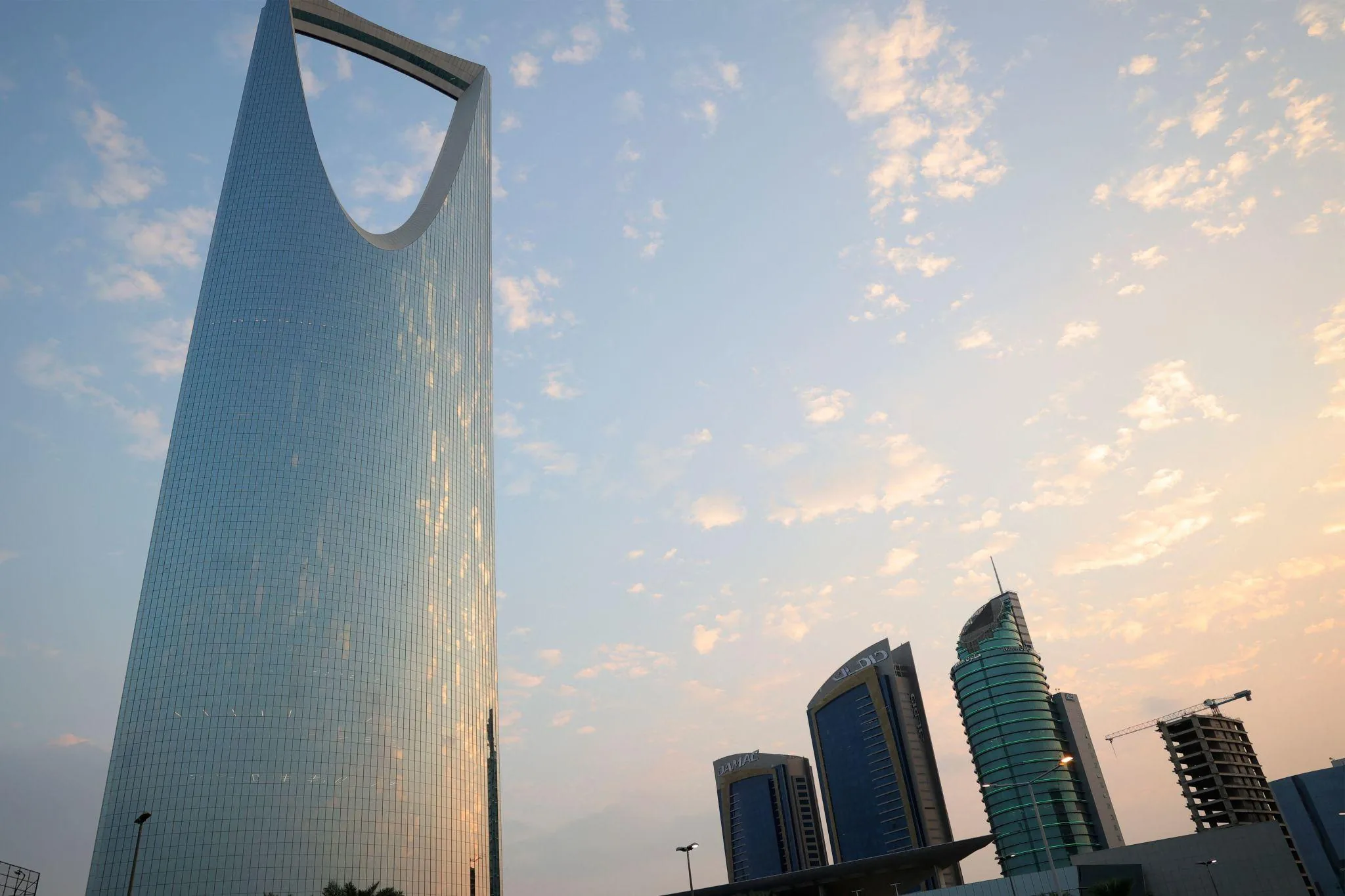
The modern Riyadh skyline — physical manifestation of Vision 2030's ambitions
The AI–Vision 2030 Connection
The relationship between AI and Vision 2030 is not incidental — it is structural. Saudi policymakers recognized early that the transformation targets set by Vision 2030 are mathematically impossible to achieve with traditional processes alone. The ratio of ambition to available human capital, time, and fiscal resources demands a technology that can compress execution timelines, automate high-volume processes, and enable data-driven decision-making at national scale.
In 2019, Saudi Arabia launched SDAIA — the Saudi Data and Artificial Intelligence Authority — as the national body responsible for making this connection operational. SDAIA's National Strategy for Data and AI explicitly frames AI not as a technology sector to be developed, but as an enabler to be deployed across every sector of the economy. This framing is significant: it positions AI as infrastructure, not product.
The result is a national AI deployment model unlike almost any other in the world. Saudi Arabia is not waiting for AI to mature — it is actively building the compute, the data governance, the Arabic language models, and the trained human capital needed to deploy AI at scale, today.
AI in Numbers: Saudi Arabia's Commitment
The scale of Saudi Arabia's AI commitment is best understood through its investment figures. The Public Investment Fund's HUMAIN initiative, launched in 2025, is building 500 megawatts of AI compute capacity — enough to power some of the world's largest language models domestically. The $100 billion AI investment pledge made at LEAP 2025 encompasses partnerships with Microsoft, Google, Amazon, NVIDIA, and dozens of specialist AI firms.
SDAIA reports that AI projects across Saudi government ministries numbered over 400 in 2025, spanning citizen services, logistics, judicial processes, customs, and financial regulation. The Kingdom's AI market is projected to reach $4.37 billion by 2034, growing at a 15% compound annual rate. These figures represent not speculative investment but active deployment — Saudi Arabia's AI strategy is already generating measurable results.
The human capital side is equally significant. Saudi universities launched over 60 new AI and data science programmes between 2022 and 2026. SDAIA's AI certification programmes have trained over 100,000 government employees. King Abdullah University of Science and Technology (KAUST) has become a recognised global AI research centre, with its Ibex model representing the Kingdom's most advanced Arabic language AI.
Economic Diversification Through AI
 Economic Diversification
Saudi Arabia's $100 billion AI investment pledge — LEAP 2025
Economic Diversification Through AI
Vision 2030's core economic target — reducing oil dependency by growing non-oil GDP — is perhaps where AI's contribution is most tangible. The Saudi Tourism Authority uses AI-powered demand forecasting to optimise destination capacity and pricing. Saudi Aramco deploys AI across its upstream operations, achieving predictive maintenance at scale that extends equipment lifecycles and reduces operational downtime. SABIC uses AI for materials research, compressing R&D cycles that previously took years into months.
The financial sector — a key pillar of Vision 2030's economic diversification — has seen perhaps the most intensive AI adoption. Saudi banks have deployed AI-driven credit scoring that extends financing to SMEs previously excluded from the formal credit system. The Capital Market Authority uses AI surveillance to detect market manipulation and insider trading in real time. Fintech platforms like STC Pay and Tamara are built on AI-powered risk engines from inception.
The tourism sector, which Vision 2030 targets to grow from contributing 3% of GDP to 10% by 2030, is a significant AI deployment zone. NEOM's Sindalah Island, Diriyah Gate, and Amaala are all designed with AI concierge systems, smart visitor management, and predictive infrastructure management. The Red Sea Project uses AI for coral reef monitoring and sustainable tourism capacity management.
✦ AI's Economic Contribution
- $135B projected GDP contribution from AI by 2030
- Saudi Aramco: AI-driven predictive maintenance at national scale
- SABIC: AI compressing R&D cycles from years to months
- Financial sector: AI credit scoring expanding SME access
- Tourism: AI concierge and smart visitor management at NEOM, Diriyah, Red Sea
Smart Government & Digital Services
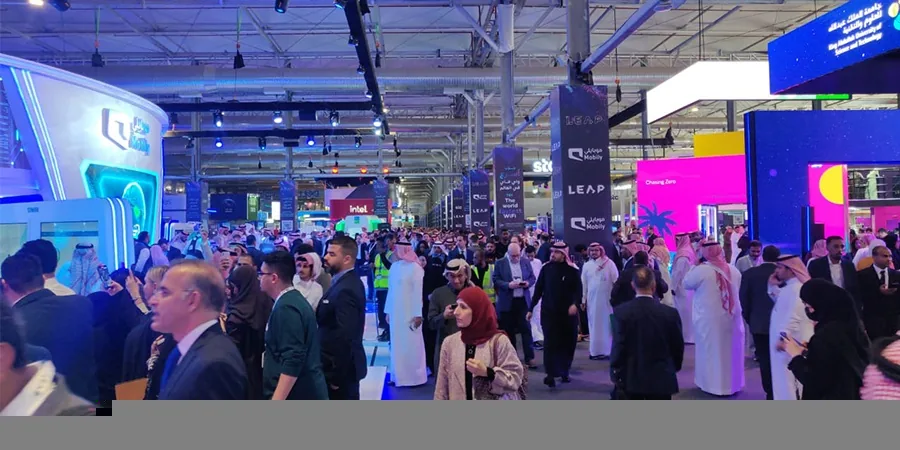 Smart Government
Saudi Arabia's tech-first government modernisation ecosystem
Smart Government & Digital Services
Vision 2030's e-Government programme — targeting 90% of government services going fully digital — is the most visible AI deployment in the Kingdom. Absher, the national digital identity platform, now handles passport renewals, traffic violations, civil registration, and dozens of other services through an AI-powered interface that resolves over 60% of queries without human escalation.
The National Transformation Programme (NTP) requires every government ministry to publish AI adoption roadmaps. Ministries of Justice, Health, Education, Finance, and Interior have all deployed AI in case management, document processing, citizen enquiries, and fraud detection. The Saudi Central Bank (SAMA) uses AI for systemic risk monitoring across the entire banking sector in real time.
The judicial system — historically paper-heavy and slow — has been a particular focus. The Ministry of Justice deployed AI document classification and automated case routing that reduced average case resolution time by 40% in pilot courts. Notarisation, contract validation, and inheritance documentation are all being automated with AI-assisted processes.
✦ Government AI Deployments
- Absher: 60%+ of citizen queries resolved without human escalation
- NTP: every ministry with published AI adoption roadmaps
- Ministry of Justice: 40% reduction in case resolution time
- SAMA: real-time AI systemic risk monitoring across banking sector
- 90% digital services target: AI is the only viable delivery mechanism
AI-Powered Smart Cities
 Smart Cities
NEOM — the AI-orchestrated zero-carbon megaproject on Saudi Arabia's northwest coast
AI-Powered Smart Cities
NEOM — the $500 billion megaproject on Saudi Arabia's northwestern coast — is Vision 2030's most dramatic expression of AI-powered urban development. THE LINE, NEOM's zero-carbon linear city, is designed with AI as its central nervous system: ambient AI managing energy flows, waste systems, transportation, climate control, and citizen services simultaneously. OXAGON, NEOM's industrial port, uses AI for predictive supply chain management and automated logistics.
Beyond NEOM, Vision 2030's smart city investments extend across the Kingdom. Riyadh's King Abdullah Financial District (KAFD) is managed by an AI operations centre that monitors 70,000+ data points across utilities, security, and traffic in real time. Jeddah Central's waterfront redevelopment incorporates AI-driven crowd management and energy optimisation. King Salman Park — the largest urban park in the world — uses AI for water consumption management and visitor experience personalisation.
The smart city programme is not simply about technology infrastructure — it is about redefining what Saudi cities offer to businesses and residents. Cities that can deliver AI-optimised services attract higher-value investment, retain talent, and achieve the quality-of-life targets that Vision 2030's tourism and residential ambitions require.
✦ Smart City AI Highlights
- NEOM / THE LINE: AI as central nervous system of zero-carbon urban design
- KAFD Riyadh: AI operations centre monitoring 70,000+ real-time data points
- Jeddah Central: AI crowd management and energy optimisation
- King Salman Park: AI water management and visitor personalisation
- OXAGON: AI-powered predictive supply chain and logistics
Healthcare Transformation
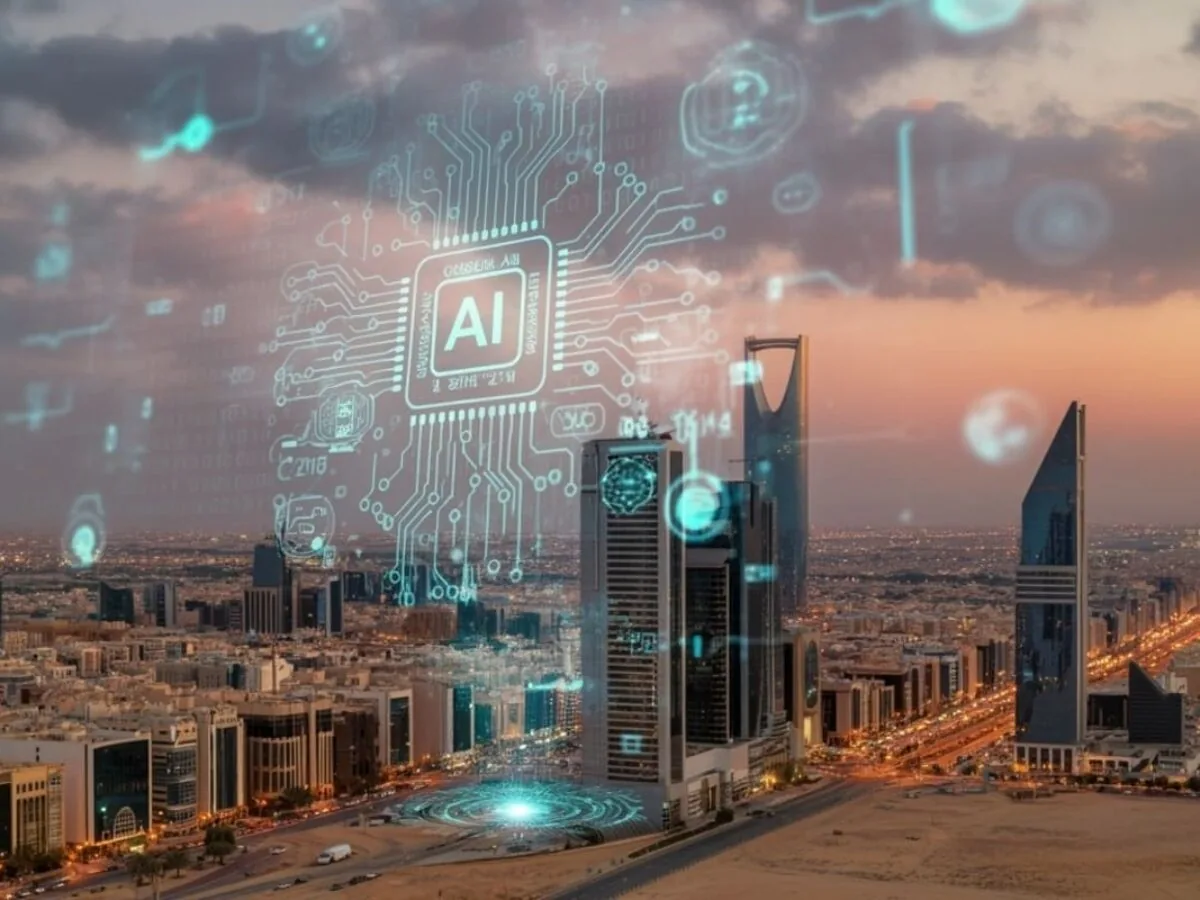 Healthcare
Saudi Arabia's AI-driven healthcare sector expansion
Healthcare Transformation
Vision 2030 targets growing the private healthcare sector's share from 40% to 65% of total healthcare delivery — a near-doubling that is only possible with AI enabling productivity at scale. King Faisal Specialist Hospital deploys AI radiology tools that analyse medical imaging 40× faster than manual review, with accuracy rates exceeding senior specialist performance in several diagnostic categories.
The Ministry of Health's AI strategy covers five domains: administrative efficiency, clinical decision support, genomics and research, public health surveillance, and patient experience. Seha Virtual Hospital — the world's largest virtual hospital by bed capacity — uses AI triage, AI diagnostics, and AI care coordination to deliver specialist care to patients in remote regions who previously had no access.
Pharmaceutical and biotech investment — an entirely new sector for Saudi Arabia under Vision 2030 — is being accelerated by AI drug discovery platforms. KAUST's bioinformatics research and Vision 2030's Health Sector Transformation Programme are jointly building the Arabic clinical data infrastructure needed for locally-relevant AI medical models.
✦ Healthcare AI Impact
- King Faisal Hospital: AI radiology 40× faster than manual review
- Seha Virtual Hospital: AI triage and diagnostics for remote regions
- Ministry of Health: AI across all 5 healthcare transformation domains
- AI drug discovery: new pharma sector accelerated for Saudi market
- Arabic clinical AI: KAUST-led data infrastructure for local medical models
Education & Human Capital
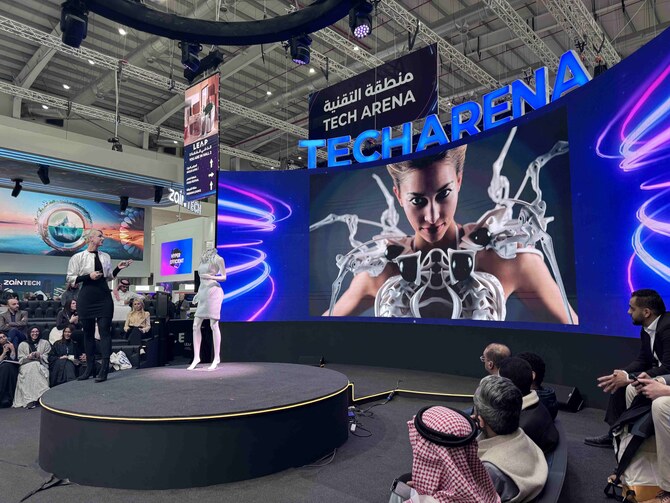 Education & Human Capital
Saudi Arabia's innovation and AI education ecosystem
Education & Human Capital
Vision 2030's Human Capability Development Programme (HCDP) aims to build a workforce capable of competing globally in the knowledge economy — and AI is both the subject being taught and the tool delivering the teaching. Saudi universities have integrated AI into curriculum across engineering, business, medicine, and the social sciences. Tatweer Education Technologies (Classera) deploys AI-powered adaptive learning across 1.2 million Saudi students.
The vocational training system — critical for Vision 2030's goal of Saudisation (increasing the proportion of Saudi nationals in private sector jobs) — uses AI skills mapping to identify labour market gaps and route trainees to relevant programmes. The Technical and Vocational Training Corporation (TVTC) partnered with AI platforms to build personalised learning paths for 500,000 trainees annually.
For higher education, KAUST's AI research output has made Saudi Arabia a credible voice in global AI academic discourse. The Kingdom produced over 3,000 AI-related research papers between 2022 and 2026 — a 400% increase from the preceding five-year period. This research base creates the talent pipeline that Vision 2030's technology ambitions depend on.
✦ Education & AI
- 60+ new AI and data science university programmes since 2022
- Classera: AI adaptive learning for 1.2M Saudi students
- TVTC: AI-personalised vocational paths for 500K trainees/year
- SDAIA: 100,000+ government employees AI-certified
- KAUST: 400% increase in AI research output 2022–2026
Energy & Sustainability
 Energy & Sustainability
OXAGON — leading Saudi Arabia's sustainable industrial revolution
Energy & Sustainability
Saudi Arabia's paradox — the world's largest oil exporter pursuing a clean energy transition — is navigated in part through AI. Saudi Aramco's AI-powered reservoir management systems extend the productive life of existing fields while reducing extraction costs, funding the transition that Vision 2030 requires. NEOM's renewable energy systems are managed entirely by AI, balancing hydrogen production, solar generation, and grid stability in real time.
Vision 2030 targets 50% of Saudi electricity generation from renewables by 2030 — from a base of under 1% in 2016. This transition cannot be managed manually. AI grid management, AI demand forecasting, and AI-optimised storage are the technologies that make intermittent renewable sources reliable at national scale. Saudi Electricity Company (SEC) has deployed AI across its grid operations, reducing transmission losses and improving fault detection response times.
The circular carbon economy — Saudi Arabia's framework for responsible energy transition — uses AI carbon tracking, AI emissions optimisation at industrial facilities, and AI-powered carbon credit verification. SABIC and Aramco's joint sustainability programmes generate AI-analysed emissions data that supports Saudi Arabia's commitments under the Paris Agreement and Vision 2030's sustainability pillar.
✦ Energy & Sustainability AI
- Aramco: AI reservoir management extending field productivity
- NEOM: AI-managed hydrogen and solar grid at industrial scale
- SEC: AI grid optimisation for 50% renewables target by 2030
- Circular carbon economy: AI emissions tracking across industry
- AI enabling KSA's clean energy transition without sacrificing output
SDAIA, HUMAIN & National AI Infrastructure

Saudi tech ecosystem — AI, smart cities, and venture capital
SDAIA, HUMAIN & National AI Infrastructure
Saudi Arabia has built two landmark institutions to anchor its national AI programme. SDAIA — the Saudi Data and Artificial Intelligence Authority — is the regulatory, strategy, and implementation body that coordinates AI deployment across 200+ government entities. Its National Data Management Office governs the data infrastructure that AI systems depend on. Its AI Ethics and Governance framework sets the standards that both public and private AI deployments must meet.
HUMAIN, launched by the Public Investment Fund in 2025, is Saudi Arabia's national AI company — tasked with building the sovereign compute infrastructure that eliminates dependence on foreign AI clouds for sensitive applications. HUMAIN's 500MW compute mandate, partnerships with NVIDIA and AMD for chip supply, and data centre construction programme make it the hardware backbone of Vision 2030's AI ambitions.
Together, SDAIA and HUMAIN create the conditions for what Saudi policymakers call 'AI sovereignty' — the ability to develop, deploy, and govern AI systems aligned with Saudi values, regulatory requirements, and strategic interests, without being dependent on foreign technology stacks for critical functions. This sovereignty framework is what separates Saudi Arabia's AI programme from a simple technology adoption story.
✦ National AI Infrastructure
- SDAIA: coordinating 400+ AI projects across 200+ government entities
- HUMAIN: 500MW sovereign AI compute — largest in Arab world
- National Data Management Office: unified data governance for AI
- Arabic Language Centre: NLP infrastructure for all Arabic AI systems
- AI Ethics Framework: standards for responsible AI deployment KSA-wide
How Elbetron Supports Vision 2030
Elbetron Technologies is a Saudi-based technology company built to deliver Vision 2030 outcomes at enterprise scale. From AI-powered business intelligence to cloud infrastructure, ERP implementation, and the Elbi agentic AI assistant platform, Elbetron's services are designed specifically for the Saudi and GCC market — with Vision 2030 compliance built in from architecture to delivery.
Elbi — Elbetron's flagship AI assistant platform — directly enables the human-facing layer of Vision 2030 transformation. Deployed across government, banking, healthcare, and retail, Elbi delivers bilingual Arabic-English voice and text AI that handles citizen and customer interactions at scale. Hosted inside the Kingdom, it meets PDPL data sovereignty requirements by design.
Elbi AI Assistant Platform
Bilingual agentic AI for citizen services, enterprise operations, and customer experience — deployed with Vision 2030 data governance built in.
Cloud & Infrastructure
Oracle Cloud and multi-cloud deployment for Saudi enterprises — meeting NCA and PDPL compliance requirements for AI workloads.
Analytics & BI
Real-time business intelligence and AI-powered analytics dashboards — turning Saudi enterprise data into Vision 2030-aligned operational decisions.
ERP & Digital Transformation
Microsoft Dynamics 365 and custom ERP implementation for Saudi organisations modernising their operational backbone under Vision 2030.
Conclusion
Vision 2030 is not a technology programme — it is a national identity transformation. But artificial intelligence has become its most essential instrument. Without AI, the pace and scale of transformation that Vision 2030 demands is simply not achievable. With AI, Saudi Arabia has a credible path to meeting targets that would otherwise require decades.
The Kingdom has understood this and acted on it with remarkable speed — building the regulatory frameworks, the compute infrastructure, the human capital, and the institutional architecture needed to deploy AI across every sector simultaneously. The $100 billion in committed investment is not hype: it reflects a clear-eyed assessment that AI is the technology on which Vision 2030 will be won or lost.
For businesses and organisations operating in Saudi Arabia, the message is equally clear: AI adoption is not a competitive advantage — it is a baseline requirement for participating in the Vision 2030 economy.
Saudi Arabia is not adopting AI because it is fashionable. It is deploying AI because it is the only way to achieve what Vision 2030 demands on the timeline Vision 2030 requires.
— Elbetron Technology Insights, 2026