Saudi Arabia is executing the most ambitious urban transformation programme in human history. Under Vision 2030, the Kingdom has committed over $1 trillion to a portfolio of mega projects spanning AI-governed smart cities, sustainable luxury tourism destinations, cultural heritage hubs, entertainment districts, and industrial innovation parks. Each of these developments is not just a construction project — it is a living laboratory for the technologies that will define the cities of the 21st century.
Saudi Arabia's Vision 2030: Building the Cities of Tomorrow
Vision 2030 is built on three strategic pillars that together define what these mega projects are collectively trying to achieve: economic diversification away from oil dependency, development of a thriving non-oil economy, and the creation of an ambitious, optimistic society. Technology — and specifically AI, IoT, and digital infrastructure — is the thread connecting every project to every pillar.
The projects covered in this article fall into three categories: entirely new smart cities and districts (NEOM, Qiddiya, KAFD); smart tourism and lifestyle destinations (Red Sea Project, AMAALA, Trojena, Sindalah); and heritage and urban regeneration projects (Diriyah Gate, Jeddah Central, King Salman Park). Each applies the smart city philosophy differently — but all share the same ambition: a technology-powered, knowledge-based economy that can sustain Saudi Arabia long after its oil reserves are depleted.
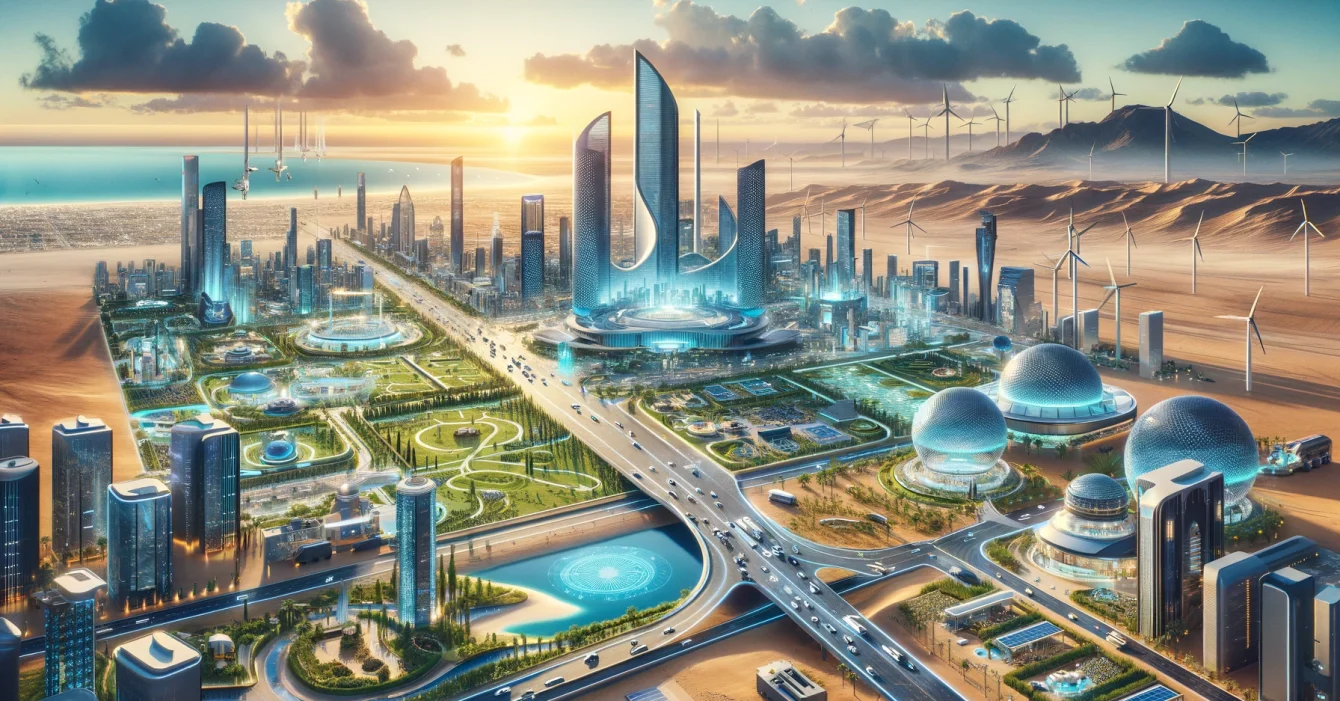 Smart City · AI
NEOM — a 26,500 km² canvas for the world's most ambitious smart city experiment
NEOM: Saudi Arabia's Futuristic Smart City Vision
NEOM is the centrepiece of Saudi Arabia's Vision 2030 — a $500 billion+ giga-project spanning 26,500 km² in the northwest of the Kingdom, along the Red Sea coast and the Gulf of Aqaba. It is not a single city but an entire region comprising multiple interconnected developments: The Line, Oxagon, Trojena, and Sindalah.
At its core, NEOM is an AI-governed smart region. Every aspect of its infrastructure — mobility, energy, water, healthcare, governance, and commerce — is being designed from scratch using digital twin technology, AI decision systems, and IoT sensor networks. NEOM's Cognitive Computing Center is developing proprietary AI models to manage urban operations at a scale never attempted before.
✦ Key Highlights & Technologies
- Powered 100% by renewable energy (solar and wind)
- Zero-carbon footprint by design — no cars, no roads at surface level
- AI manages every city system from traffic to utilities to emergency response
- Home to NEOM Tech & Digital, a dedicated technology investment arm
- Digital twin of the entire region for real-time simulation and planning
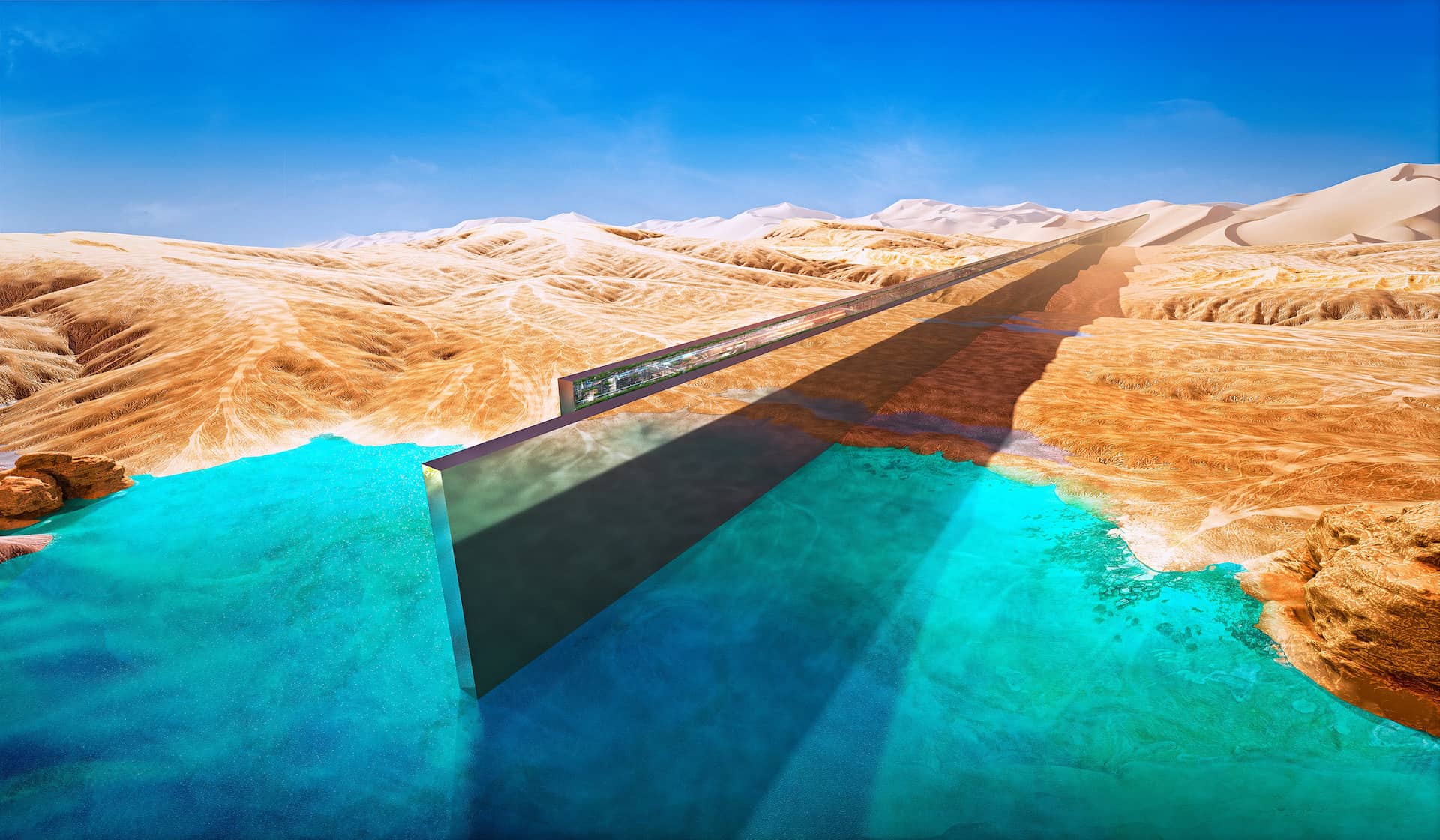 Urban Innovation · AI City
The Line — a 170 km linear city with no roads, no cars, and zero carbon emissions
The Line
The Line is NEOM's most radical proposition: a 170-kilometre-long, 200-metre-wide mirrored city stretching through the Saudi desert, housing up to 9 million people in a zero-carbon, car-free environment. The city is a single linear structure rising 500 metres above sea level.
The Line is arguably the most AI-dependent city ever designed. Its entire transportation backbone is a high-speed rail running through the building's core, managed by predictive AI. All services — retail, healthcare, education, sport, work — are accessible within a 5-minute walk. AI algorithms manage resource distribution, crowd flow, energy optimization, and predictive maintenance across the entire 170 km structure.
✦ Key Highlights & Technologies
- Zero roads — all mobility via high-speed underground rail
- AI-predicted service delivery: no waiting, everything on-demand
- 100% renewable energy — solar panels integrated into the mirrored facade
- Digital twin operating in real-time to simulate every urban scenario
- 104 km² of preserved natural landscape surrounding the structure
 Industrial City · Manufacturing
Oxagon — the world's largest floating industrial complex, built on the Red Sea
Oxagon: The Future Industrial City of NEOM
Oxagon is NEOM's industrial and manufacturing hub — the world's largest floating industrial complex, positioned at the intersection of global shipping lanes on the Red Sea. It is an octagonal structure partially on land and partially floating on water, designed to host clean industries, advanced manufacturing, and logistics operations.
Oxagon is built on the principle of Industry 4.0 from day one. It uses autonomous robotics, AI-driven supply chain management, digital twin manufacturing, and clean hydrogen energy. The port and logistics network are fully automated — self-driving vehicles and autonomous cranes operate continuously, managed by AI coordination systems.
✦ Key Highlights & Technologies
- World's largest floating industrial structure
- 100% clean energy — green hydrogen and renewable power
- Fully automated port with autonomous loading and logistics
- AI-managed smart manufacturing for advanced industries
- Integrated with The Line's underground cargo rail network
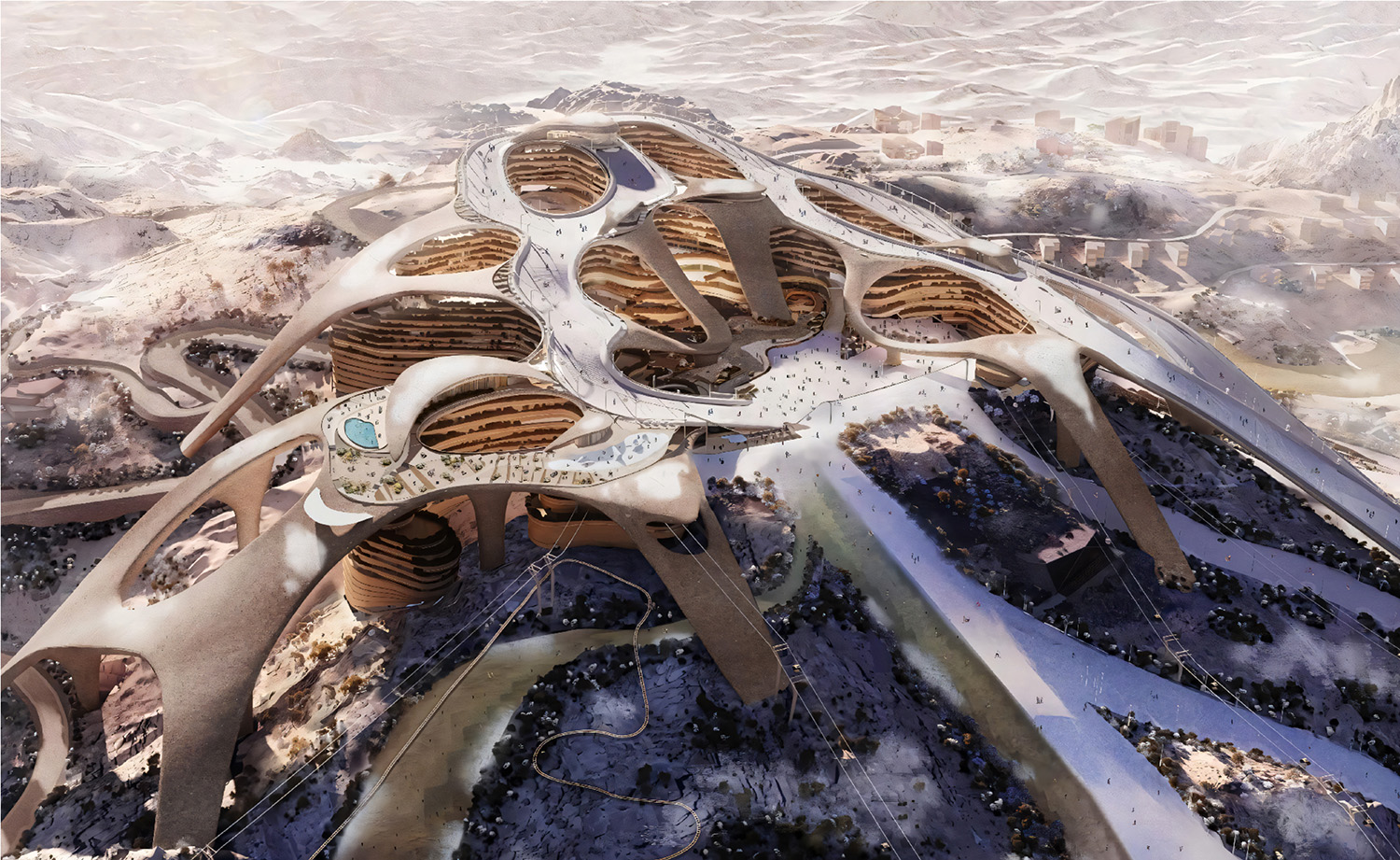 Mountain Tourism · Ski Resort
Trojena — year-round ski and outdoor adventure resort in the mountains of NEOM
Trojena: Saudi Arabia's Mountain Tourism Destination
Trojena is NEOM's mountain destination — a year-round outdoor lifestyle and ski resort built in the Sharrma mountains at 1,500–2,600 metres above sea level. It will host the Asian Winter Games 2029, making it the first outdoor winter games in the Middle East.
Trojena integrates smart technology throughout its resort experience. Smart ski systems use AI and sensor data to manage snow conditions, slope safety, and visitor flow. A lake village with smart homes and connected infrastructure sits at the resort's core. All energy comes from renewable sources, and IoT sensors monitor the natural environment to minimize ecological impact.
✦ Key Highlights & Technologies
- Host city for Asian Winter Games 2029
- Natural ski slopes — no artificial environments required
- Smart resort management powered by AI and IoT sensors
- Year-round outdoor activities: hiking, climbing, water sports on the lake
- Designed for 7,000 permanent residents and millions of annual visitors
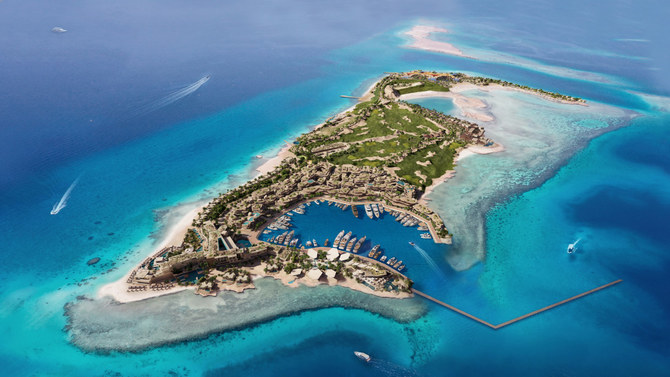 Luxury Island · Yachting
Sindalah — a luxury island yacht club and resort in the Gulf of Aqaba
Sindalah: Luxury Island Tourism in the Red Sea
Sindalah is NEOM's luxury island destination in the Gulf of Aqaba — a 840-hectare island designed as an international yachting hub with luxury resorts, beach clubs, and a world-class marina. It is set to be NEOM's first completed destination, with early phases opening by 2024–2025.
Sindalah's smart infrastructure covers its marina operations, hospitality systems, and environmental monitoring. AI manages berth allocation, predictive maintenance of marine facilities, and real-time monitoring of coral reef health around the island. All energy on the island runs on renewable sources integrated into the island's design.
✦ Key Highlights & Technologies
- 86-berth superyacht marina — one of the region's largest
- AI-managed marina operations and smart berth allocation
- Coral reef monitoring using underwater IoT sensor networks
- 400+ luxury hotel keys across multiple resort properties
- First NEOM destination to open — accelerated delivery timeline
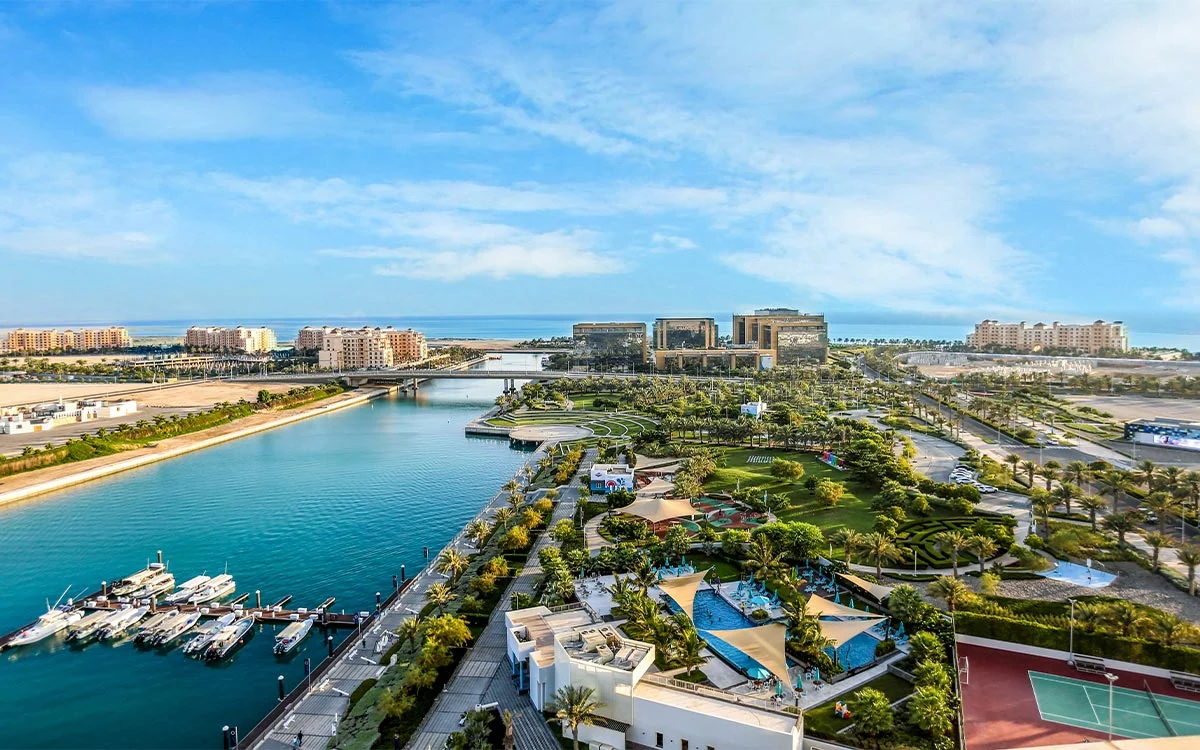 Economic City · Industrial Port
King Abdullah Economic City — Saudi Arabia's privately built smart economic hub on the Red Sea
King Abdullah Economic City (KAEC): Saudi Arabia's Premier Economic Hub
King Abdullah Economic City (KAEC) is one of the world's largest private city projects, located on the Red Sea coast 100 km north of Jeddah. Spanning 173 km², it includes King Abdullah Port — one of the fastest-growing ports in the world — alongside industrial zones, a residential city, educational institutions, and a retail district.
KAEC has been progressively building its smart city infrastructure since 2005. Its port uses AI-powered logistics management, automated cranes, and predictive shipping analytics. The industrial zone hosts manufacturers using Industry 4.0 technologies. Emaar Economic City, which manages KAEC, has been integrating smart grid technology, digital services, and connected community infrastructure throughout the city.
✦ Key Highlights & Technologies
- King Abdullah Port — one of the Top 100 container ports globally
- AI logistics management and automated port operations
- Industrial zone with 200+ manufacturers across 13+ sectors
- Smart grid energy management across the entire city
- Home to Effat University, one of Saudi Arabia's leading institutions
 Financial District · Smart Office
King Abdullah Financial District — Riyadh's LEED-certified smart financial hub
King Abdullah Financial District (KAFD): Riyadh's Financial Powerhouse
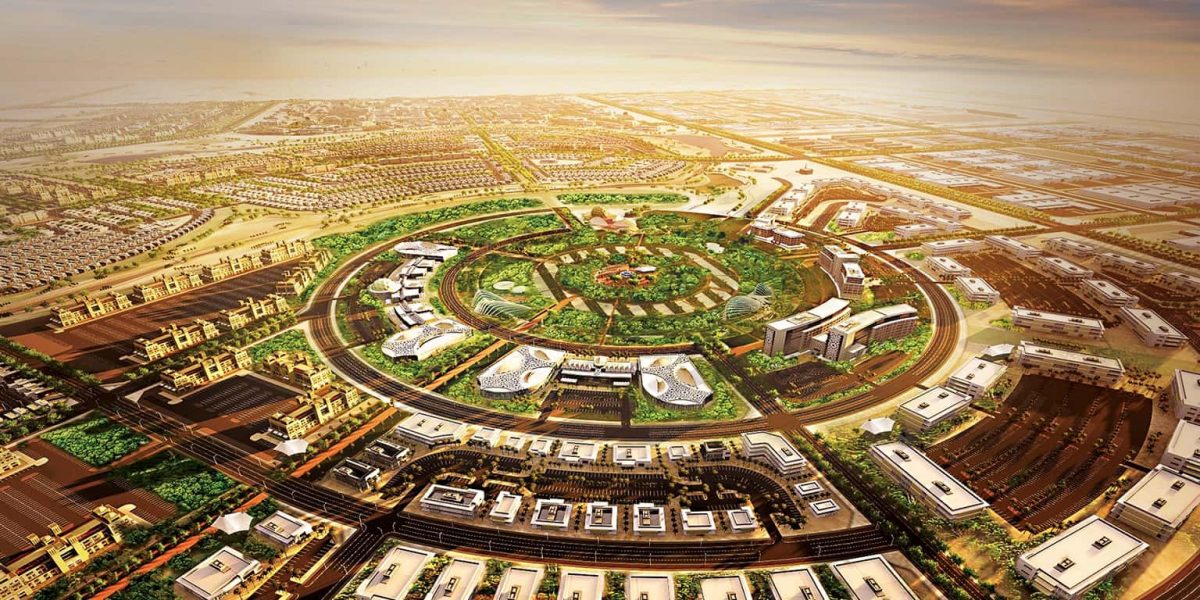
King Abdullah Financial District (KAFD) is Riyadh's premier financial and business district — a 1.6 million m² LEED Platinum-certified development in the heart of the Saudi capital. It houses the Saudi Exchange (Tadawul), the Capital Market Authority, and hundreds of financial institutions and corporations.
KAFD is one of the most technologically advanced business districts in the Middle East. Its entire infrastructure — from energy management and HVAC to access control and visitor navigation — is managed through a centralised smart building management platform. AI systems optimize energy usage across all 59 buildings in real time, achieving 40%+ energy savings versus conventional districts.
✦ Key Highlights & Technologies
- LEED Platinum certified — one of the greenest districts in the world
- AI-powered central building management across 59 towers
- 40%+ energy savings through smart grid and predictive HVAC systems
- Home to Tadawul — the Saudi stock exchange and Arab world's largest bourse
- Integrated pedestrian network with smart wayfinding and crowd analytics
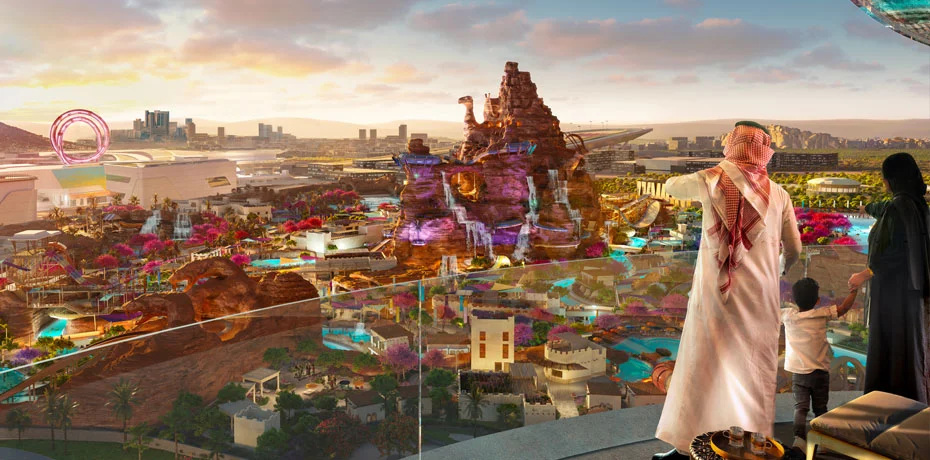 Entertainment · Sports Tech
Qiddiya — Saudi Arabia's $8B+ entertainment and sports city near Riyadh
Qiddiya: The Entertainment Capital of Saudi Arabia
Qiddiya is Saudi Arabia's mega entertainment, sports, and culture destination — a 334 km² project located 40 km southwest of Riyadh. Backed by the Public Investment Fund (PIF), it will be home to a Six Flags theme park, motorsport facilities including a Formula E circuit, a water park, sports arenas, and cultural venues.
Qiddiya's digital infrastructure is built for the experience economy. Smart venue management, AI-powered crowd analytics, digital ticketing and queuing systems, and personalized visitor experiences powered by data are all embedded into the design. 5G networks cover the entire site. The motorsport district uses real-time telemetry and AI simulation to support both professional racing events and public driving experiences.
✦ Key Highlights & Technologies
- Six Flags theme park — the flagship anchor attraction
- Formula E and motorsport circuit with AI telemetry systems
- 5G-connected smart venue management across all facilities
- AI crowd analytics for safety, experience optimization, and operations
- Digital twin of the entire destination used for planning and operations
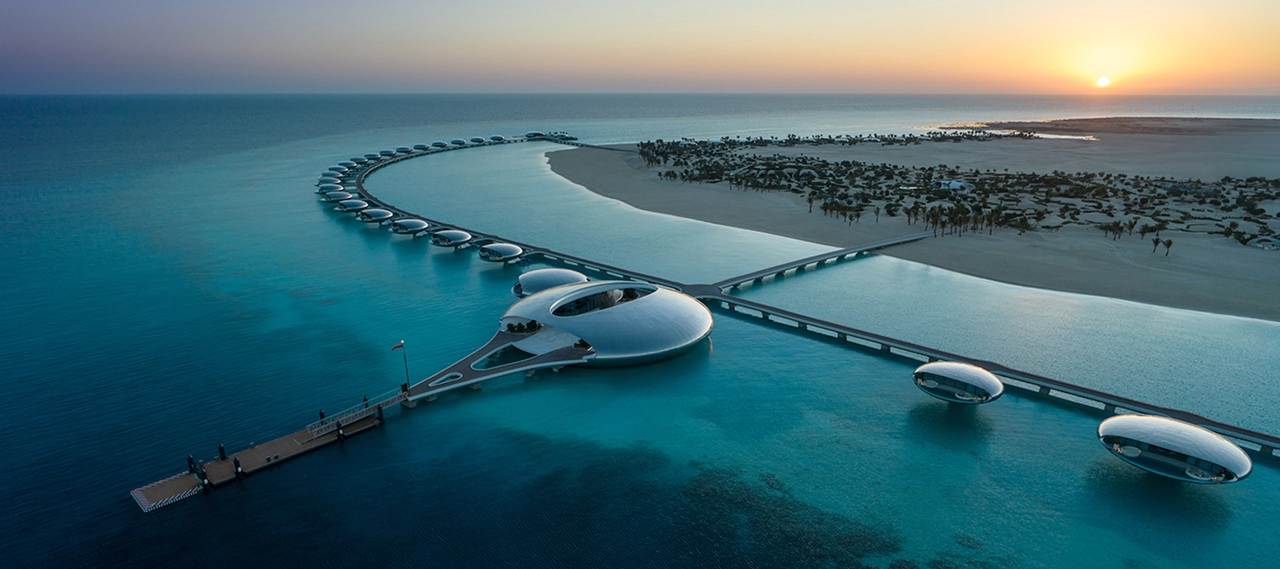 Luxury Tourism · Eco Resort
The Red Sea Project — 90 islands of sustainable luxury tourism on Saudi Arabia's west coast
Red Sea Project: Sustainable Luxury Tourism in the Kingdom
The Red Sea Project is a $28 billion luxury tourism destination spanning 28,000 km² of pristine Saudi coastline, including 90 islands, coral reefs, ancient archaeological sites, and dormant volcanoes. Developed by Red Sea Global (RSG), it targets the high-end sustainable tourism market.
The Red Sea Project is built around a strict environmental charter — 30% of the area will be developed, while 70% remains a protected natural reserve. Smart monitoring systems using AI and remote sensing track coral reef health, wildlife movements, and water quality in real time. All energy on the destination comes from solar and wind, stored in one of the largest battery storage systems in the Middle East.
✦ Key Highlights & Technologies
- Net positive environmental impact — the only tourism destination targeting this
- 100% renewable energy with 1,000+ MWh battery storage capacity
- AI coral reef monitoring with underwater sensor and drone networks
- Giga-scale luxury resort opening in phases through 2030
- Shura Island as the main gateway hub with airport, marina, and hotels
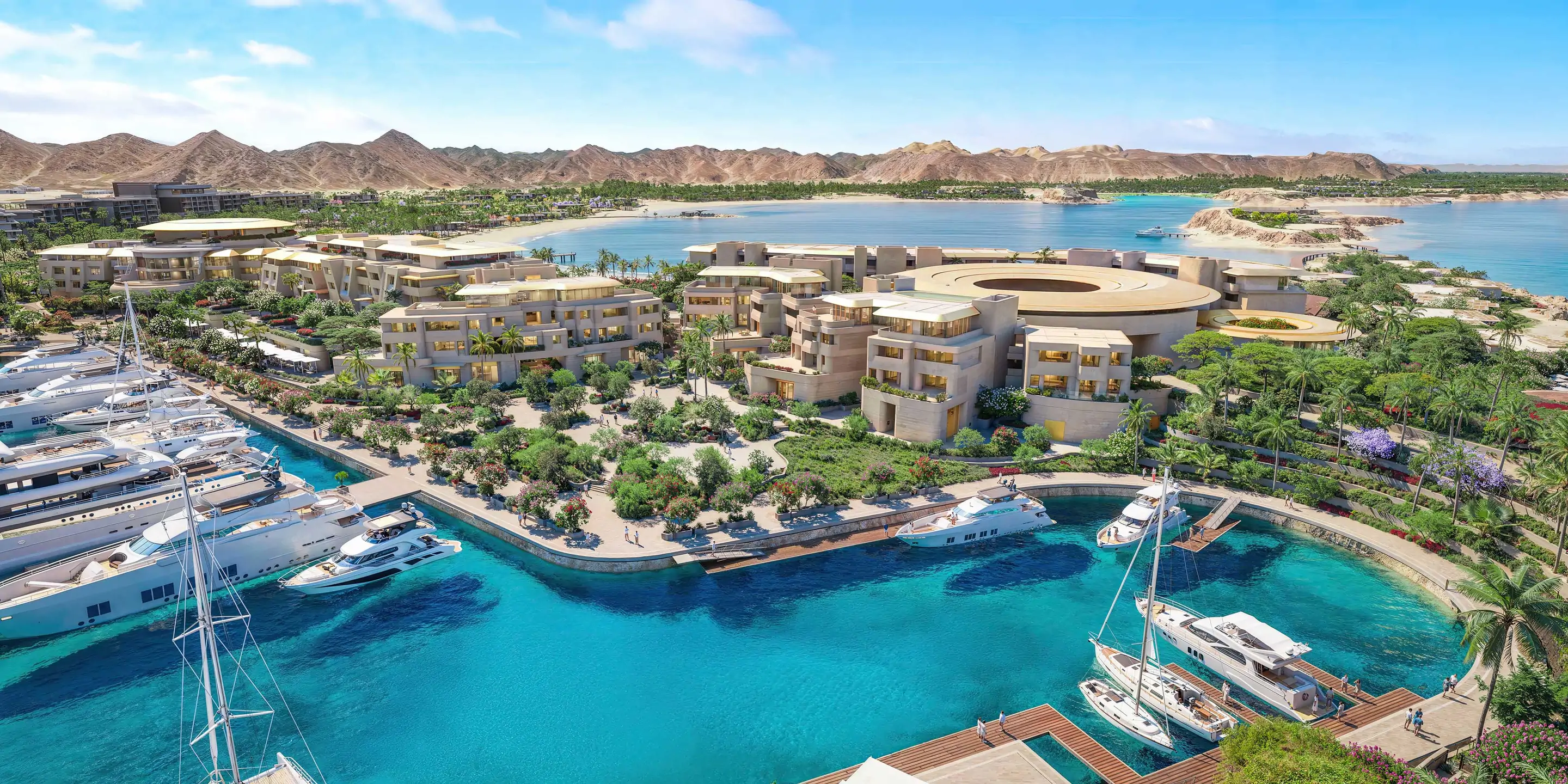 Ultra-Luxury · Wellness
AMAALA — ultra-luxury wellness and arts destination on the Red Sea coast
AMAALA: Ultra-Luxury Wellness Tourism in Saudi Arabia
AMAALA is Saudi Arabia's ultra-luxury wellness, arts, and lifestyle destination on the Prince Mohammed bin Salman Natural Reserve on the northwest Red Sea coast. It is positioned as the world's most exclusive wellness resort — catering to the ultra-high-net-worth market with a focus on wellbeing, arts, and cultural experiences.
AMAALA integrates smart wellness technology throughout its guest experience. AI-powered health monitoring, personalized wellness programmes curated through data, smart room environments that adapt to guest biometrics, and sustainable smart building systems are all embedded into the destination's design. Like the Red Sea Project, it operates entirely on renewable energy.
✦ Key Highlights & Technologies
- 3 development communities: Triple Bay, The Coastal Development, and The Island
- AI-personalized wellness journeys based on health data and preferences
- Smart rooms with biometric adaptation — lighting, temperature, ambiance
- 100% renewable energy — zero carbon from day one
- Target: 2,500+ hotel keys across ultra-luxury resorts and branded residences
 Heritage · Culture
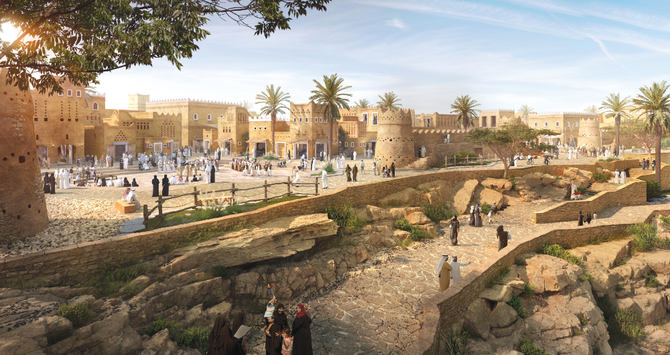
Diriyah Gate — the birthplace of the Saudi state, reimagined as a world heritage destination
Diriyah Gate: Preserving Saudi Arabia's Cultural Heritage
Diriyah Gate is a $20 billion+ heritage and cultural mega project built around At-Turaif — a UNESCO World Heritage Site and the birthplace of the Saudi state in the 15th century. Located on the outskirts of Riyadh, it aims to become one of the world's premier cultural tourism destinations.
Diriyah Gate uses smart technology to bring its heritage narrative to life. Augmented reality experiences overlay historical reconstructions on physical ruins. AI-powered multilingual guides personalize the visitor journey. Smart crowd management systems ensure the preservation of the ancient site while accommodating millions of visitors. The development includes hotels, restaurants, cultural institutions, and retail — all built in the traditional Najdi architectural style.
✦ Key Highlights & Technologies
- UNESCO World Heritage Site — At-Turaif district
- AR and AI-powered immersive heritage experiences
- Smart visitor management to protect the archaeological site
- 2,000+ hotel keys and 100,000 m² of cultural and retail space
- Wadi Hanifah ecological restoration running alongside the development
 Urban Park · Smart Green Space
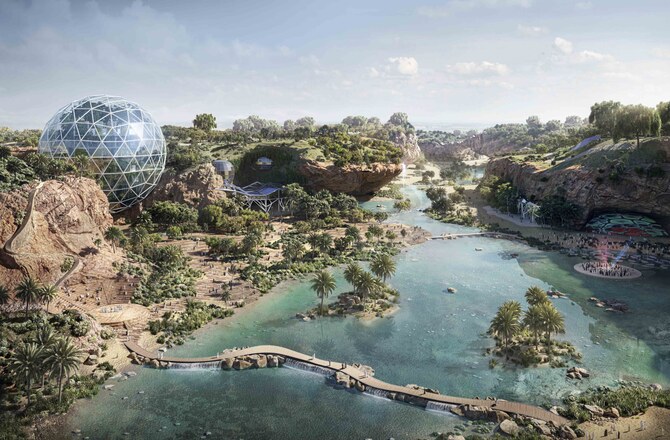
King Salman Park — the world's largest urban park, in the heart of Riyadh
King Salman Park: The World's Largest Urban Park
King Salman Park is a $23 billion+ project that will create the world's largest urban park in the heart of Riyadh — covering 16 km² (larger than London's Hyde Park and New York's Central Park combined). It sits on the former Riyadh Air Base and forms part of the broader Riyadh Green Initiative.
The park is a smart green infrastructure project at its core. IoT sensors monitor soil health, air quality, water usage, and plant health in real time. AI irrigation systems reduce water consumption by 60%+ compared to conventional parks. Smart pathway lighting adapts to pedestrian presence. A cultural boulevard, performing arts centre, golf course, sports facilities, and a Royal Arts Complex are all integrated within the park's smart digital ecosystem.
✦ Key Highlights & Technologies
- 16 km² — larger than Hyde Park and Central Park combined
- AI irrigation reducing water use by 60%+ versus conventional parks
- IoT environmental monitoring: air, soil, water quality in real time
- Smart pedestrian lighting and crowd-flow management
- Part of Riyadh Green Initiative targeting 7.5 million trees planted
 Waterfront · Urban Regeneration
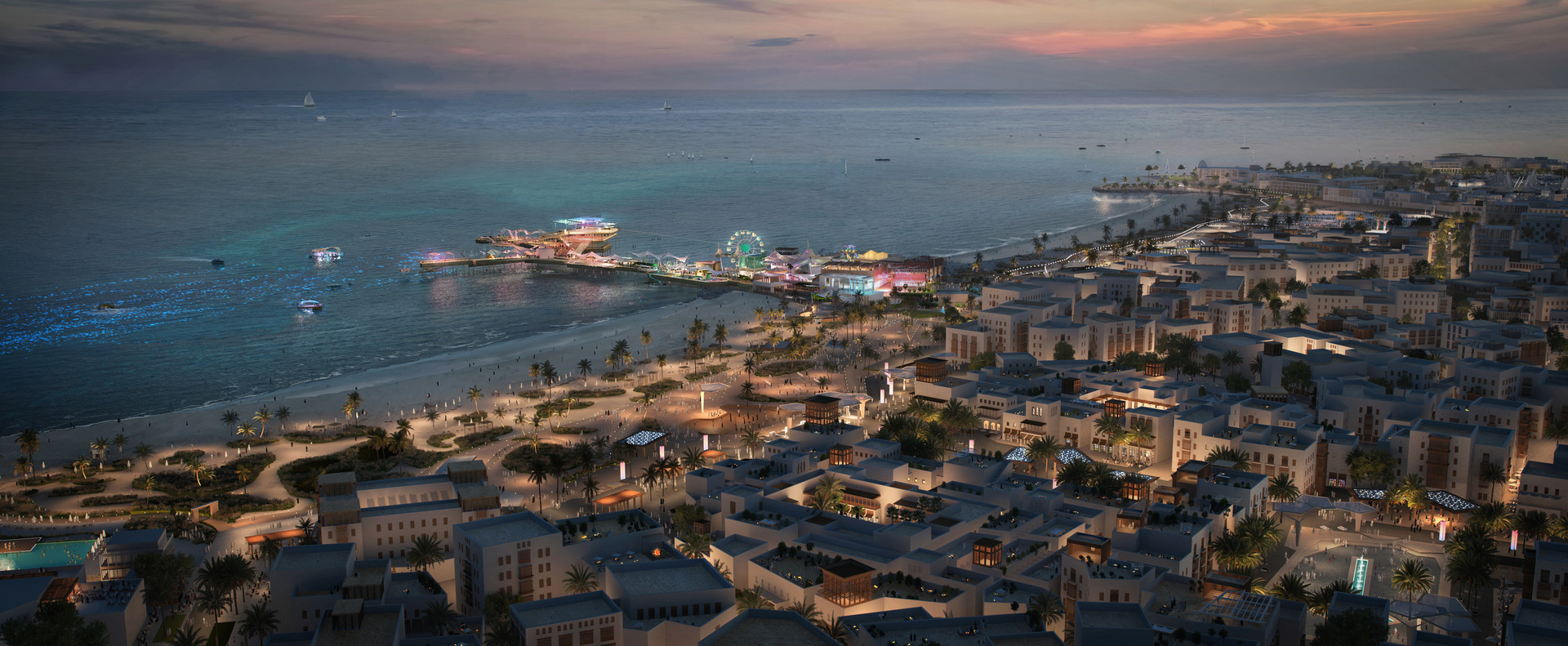
Jeddah Central — a $20B waterfront regeneration transforming 5.7 km of Red Sea coastline
Jeddah Central Project: Redefining Waterfront Living
Jeddah Central Project is a $20 billion urban waterfront regeneration covering 5.7 km of Jeddah's Red Sea coastline. Managed by Jeddah Central Development Company (a PIF entity), it will deliver an opera house, a sports stadium, a museum, a marina, hotels, residential towers, and retail — transforming the city's urban seafront.
Jeddah Central is being built with smart city principles embedded into its master plan. A unified smart city platform manages energy, water, traffic, and security across the entire 5.7 km waterfront. Smart parking systems, integrated mobility hubs connecting to Jeddah's metro network, and AI-driven building management across all facilities are core components of the development.
✦ Key Highlights & Technologies
- Opera house — the first world-class performing arts venue in Jeddah
- Smart city platform managing the entire waterfront district
- AI traffic and parking management integrated with Jeddah Metro
- Jeddah Tower (1 km skyscraper) anchors the northern end of the project
- 10 million m² of mixed-use development delivered in phases to 2030
 Energy Hub · Industry 4.0
SPARK — King Salman Energy Park, Saudi Arabia's global energy industry hub in the Eastern Province
SPARK: Saudi Arabia's Energy Innovation Hub
SPARK (King Salman Energy Park) is a $4 billion+ industrial mega project in Ahsa, Eastern Province — designed to be the global hub for the energy sector. Managed by Saudi Aramco, it covers 50 km² and hosts manufacturers, service companies, and technology providers serving the global energy industry.
SPARK is built on the Industry 4.0 blueprint. Its entire infrastructure runs on a smart grid powered by renewable energy supplemented by natural gas. AI-managed logistics, autonomous material handling, digital twin manufacturing environments, and a centralised industrial IoT platform connecting all tenants are operational features. SPARK is also home to an innovation and R&D zone where energy technology companies develop and test next-generation solutions.
✦ Key Highlights & Technologies
- Managed by Saudi Aramco — the world's largest energy company
- Industry 4.0 manufacturing with AI and digital twin environments
- Centralised industrial IoT platform connecting all tenants
- On-site renewable energy with smart grid distribution
- R&D and innovation zone for next-generation energy technology
How Elbetron Supports Saudi Arabia's Smart City Vision
Saudi Arabia's mega projects are not just architectural ambitions — they are the world's largest demand signal for technology expertise, digital infrastructure, custom software, and AI capabilities. Whether you are a contractor supplying to NEOM, an enterprise adapting to the digital-first environment of KAFD, a tourism operator building for the Red Sea Project, or a manufacturer entering SPARK's industrial ecosystem, the technology demands are extraordinary.
- Custom Software Development: Bespoke digital solutions built Arabic-first, integrated with Saudi government platforms and the technology stacks used across mega projects.
- IoT & Data Integration: Connecting infrastructure sensors, devices, and operational systems to advanced data analytics platforms — the foundation of any smart city project.
- AI & Analytics: Building AI models for operations optimization, predictive maintenance, visitor experience, and strategic business intelligence.
- Cloud Migration & Architecture: Sovereign, secure cloud environments compliant with Saudi CST and NCA data regulations.
- ERP & CRM Integration: Connecting enterprise management systems to smart city platforms, digital commerce channels, and government service APIs.
The future is being built right now in Saudi Arabia — and the opportunity to participate in that transformation is open to every organisation that moves decisively. Reach out to Elbetron today and let's build your role in it together.