A decade ago you sized a data centre in racks. Today serious AI capacity is quoted in gigawatts of electrical load, because the binding constraint is no longer floor space or even chips — it is power.
Saudi Arabia has moved decisively into that race. HUMAIN has targeted roughly 1.9 GW of AI compute by 2030 and more than 6 GW by 2034, and existing capacity was reported sold out in August 2025. The Kingdom has advantages here that are genuinely structural.
This article explains why AI is now an energy story, what Saudi Arabia brings to it, where the real bottlenecks are, and what it changes for organisations choosing where to run their workloads.
We Build AI That Runs Where Your Data Has to Live
Elbetron Technologies is a Saudi technology company building production AI for organisations in the Kingdom and the wider GCC. Our work is not demos — it is systems that answer real customers, in Arabic and English, every day.
Elbi, our bilingual AI assistant platform, is the clearest example: retrieval-grounded answers drawn from your own documents, deployable on infrastructure you control, with a voice layer for phone and in-app conversations.
From first workshop to production rollout, we design, build and run the AI systems behind Saudi customer service, operations and internal knowledge.
Why AI Became an Energy Story
Training and serving large models consumes electricity at industrial scale. A single high-density AI hall can draw more power than a small town, and that draw is continuous rather than seasonal. Once you are building at that scale, the question stops being "can we buy the hardware" and becomes "can we power and cool it".
This reorders national advantage. Countries with abundant, cheap, dispatchable power and land near transmission become attractive locations for AI capacity in a way that has little to do with their software industries. Energy policy has quietly become AI policy.
- Generation capacity and grid connection queues
- Cooling — water availability or high-efficiency alternatives
- Transmission infrastructure near suitable land
- Construction and commissioning timelines, measured in years
Saudi Arabia’s Structural Advantages
The Kingdom has land, capital, and some of the best solar irradiance on earth, alongside an existing energy industry that understands building large infrastructure on schedule. That combination is unusual and hard to replicate quickly.
Geography helps too. Saudi Arabia sits between Europe, Africa and Asia with improving subsea connectivity, which matters for latency-sensitive inference serving regional users. Compute located in the Kingdom serves the GCC better than compute in Northern Europe.
Where the Bottlenecks Really Are
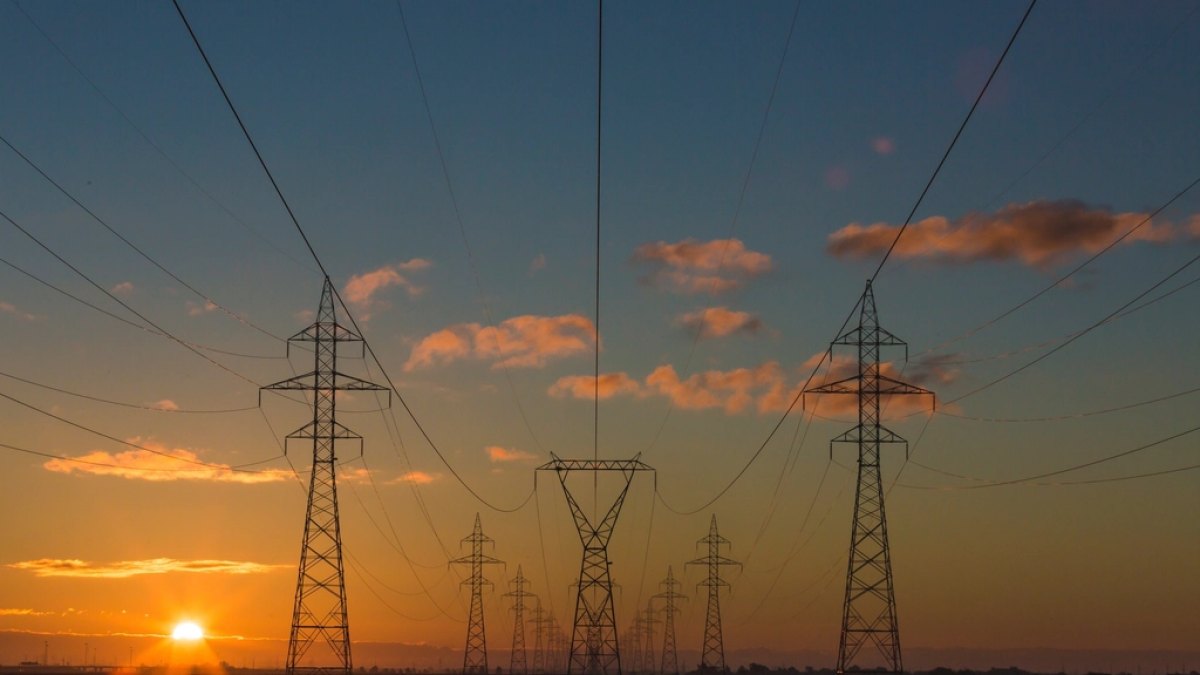
Announced capacity and energised capacity are different things. Between them sit grid connections, substations, cooling plant, and commissioning — none of which move at software speed. A gigawatt announced in 2026 is not a gigawatt serving traffic in 2027.
Capital is the other constraint. In September 2026, HUMAIN was reported to be seeking outside investment for data centre expansion as state spending tightened. That is normal for infrastructure of this scale, but it means delivery is tied to capital markets as much as to policy.
- Ask whether capacity is contracted, built, or energised
- Check grid connection dates, not press release dates
- Sold-out capacity is a stronger signal than announced capacity
- Funded expansion is more credible than planned expansion
What It Means for Your Workloads
For most organisations the practical question is narrower than the headlines: where should our inference run? For regulated Saudi workloads the answer is increasingly in-Kingdom, because the Personal Data Protection Law and sector guidance push personal data toward local residency.
Domestic capacity at scale makes that choice cheaper and more realistic than it was three years ago. It also makes self-hosted and private deployments practical for organisations that previously assumed a foreign API was the only viable option.
Frequently Asked Questions
Why is AI capacity measured in gigawatts?
Because power is the binding constraint. High-density AI halls consume electricity at industrial scale and continuously, so capacity planning is dominated by generation, grid connection and cooling rather than by floor space or chip supply alone.
What advantages does Saudi Arabia have in AI infrastructure?
Abundant land, substantial capital, exceptional solar resources, an energy industry experienced in large-scale delivery, and a geographic position between Europe, Africa and Asia that suits low-latency inference for regional users.
Does my company need in-Kingdom hosting?
If you process personal data of Saudi residents in regulated contexts, local residency is increasingly expected under the Personal Data Protection Law and sector guidance. Growing domestic capacity makes in-Kingdom hosting materially more practical than it was a few years ago.
How should I read gigawatt announcements?
Distinguish announced, contracted, built and energised capacity. Grid connection timelines and funding status are better indicators of when capacity actually becomes usable than the headline figure or announcement date.
Conclusion
AI has become an infrastructure and energy business, and Saudi Arabia is competing in it with real structural advantages rather than borrowed ones. The targets are large and the demand signals — particularly sold-out capacity — are credible.
The constraints are equally real: power, capital and construction time. For organisations in the Kingdom, the practical benefit is already arriving — running AI workloads locally, under Saudi jurisdiction, is now a realistic default rather than a compromise.
How Elbetron Can Help
Services directly related to what you just read